Service Specifications at Infrastructure Crossings
Infrastructure crossings require trenchless solutions that ensure geometric accuracy, safety, and minimal disruption to traffic or existing services. Eurohinca carries out these projects using microtunneling, pipe jacking, Direct Pipe®, or directional drilling, as defined by the following technical parameters:
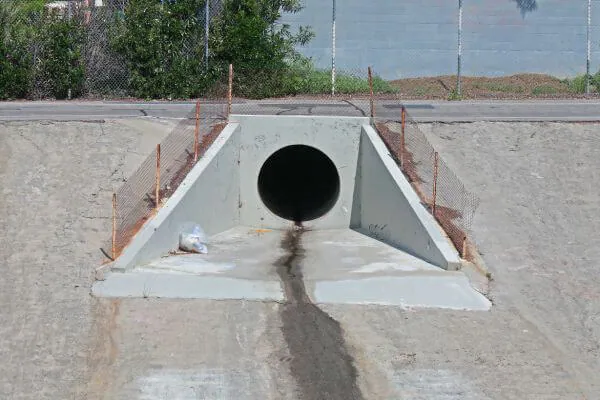
• Main applications: Underpasses beneath roads and highways, railroad tracks, streetcar tracks, urban railways, canals, rivers, industrial pipelines, underground utility areas, and any area where open-cut excavation is not feasible due to impact, risk, or operational restrictions.
• Construction methods used: Remote-controlled microtunneling, pipe jacking, Direct Pipe®, or HDD, selected based on geotechnical conditions, the length of the crossing, the type of overhead infrastructure, and ground protection requirements.
• Soil conditions and water table: Suitable for cohesive, mixed, or stabilized granular soils. In the presence of groundwater or where there is a risk of ground loss, pressurized shields (EPB or Slurry) are used to maintain the stability of the cutting face.
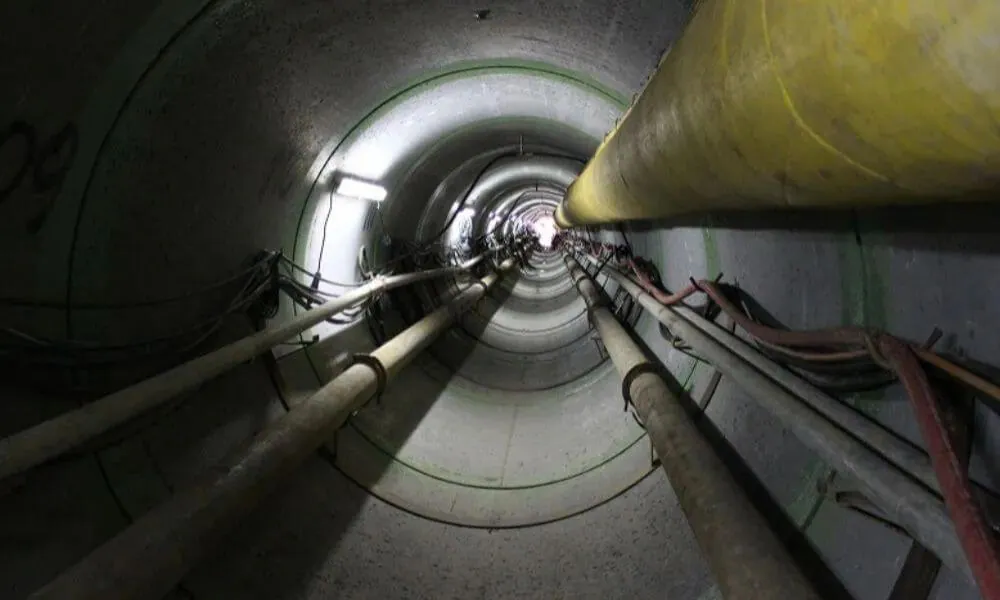
• Diameters and types of conduction: Non-accessible pipes (concrete, steel, stoneware) or accessible tunnels, depending on hydraulic or service requirements. The choice depends on the above-ground infrastructure, the depth, and the operator’s requirements.
• Typical lengths of the crossing: From short urban sections under roadways to crossings spanning several hundred meters under linear infrastructure. The length is determined based on the method, geotechnical conditions, and implementation logistics.
• Curvature and Geometry: Most intersections are designed to be straight, but they can be constructed gentle curves in plan or elevation views when the method (HDD or specific microtunneling designs) allows it.
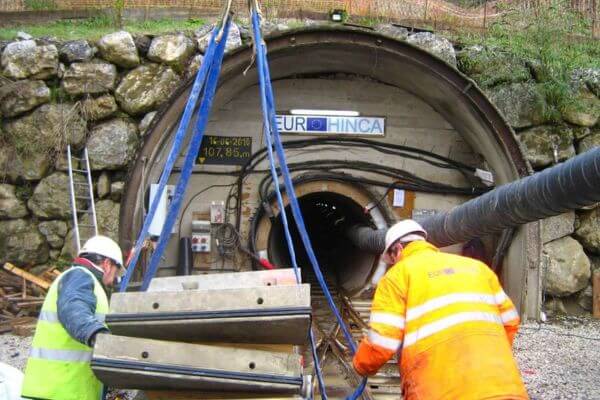
• Civil works prerequisites: Launch and reception pits for microtunneling, pipe jacking, or Direct Pipe®, or drilling rigs for horizontal directional drilling (HDD). Access points, storage areas, signage, and compatibility with traffic or ongoing services are monitored.
• Protection of existing services: Identification of pipes, cables, foundations, and critical infrastructure. Preventive measures are implemented to avoid interference, ground movement, or disruption to existing services.
• Quality control and traceability: Monitoring of alignment, thrust, face pressure, cutting torque, excavated volume, tensile stresses (in HDD), and hydraulic support parameters. Final verification via CCTV, leak tests, and as-built documentation of the crossing.






 Español
  English
  Français