Tunnel Boring Machines for tunnel excavation

Eurohinca (Europea de Hincas Teledirigidas, S.A.), Trenchless specialist since 1996 - 14 TBMs and >120 km executed.

We advise the choice of tunnel boring machine (open shield, EPB, hydroshield) according to geology, pressure and layout, and we execute with microtunneling (MTBM), segment tunnel, Direct PipeHDD - precise routing, pressure/tightness control and ISO 9001/14001/45001 compliance.
See technical assistance and engineeringreferences.

tunnel boring machine

Tunneling with tunnel boring machine

The tunnelling with tunnel boring machine is an advanced technique that guarantees efficiency and safety in subway projects. Using specialized equipment, such as our tunnel boring machines, we are able to carry out the tunnel excavation accurately, minimizing the impact on the environment and ensuring that project deadlines are met. TBMs are designed to adapt to different types of terrain, making them a versatile solution for a wide range of applications, from subways to sewer tunnels.

How excavation with a tunnel boring machine is performed

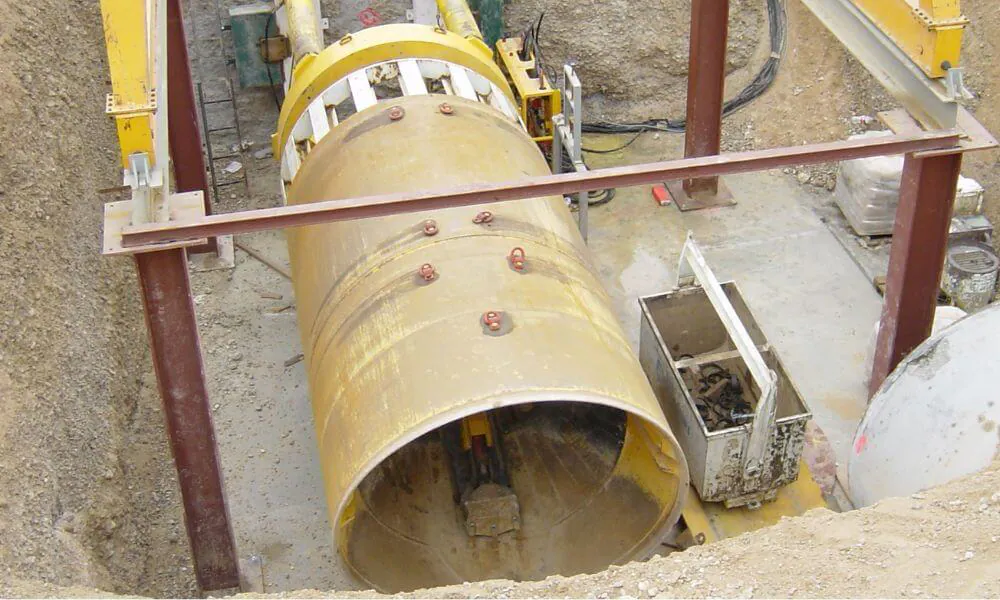
In a subway project, the tunnel boring machine in subway projects plays a crucial role in facilitating the continuous and structured excavation of the tunnel. The TBM advances as it excavates, while the excavated material is efficiently transported to the surface. This process ensures that the tunnel is constructed according to project specifications, maintaining the integrity of the subway environment and allowing effective integration with other infrastructure.

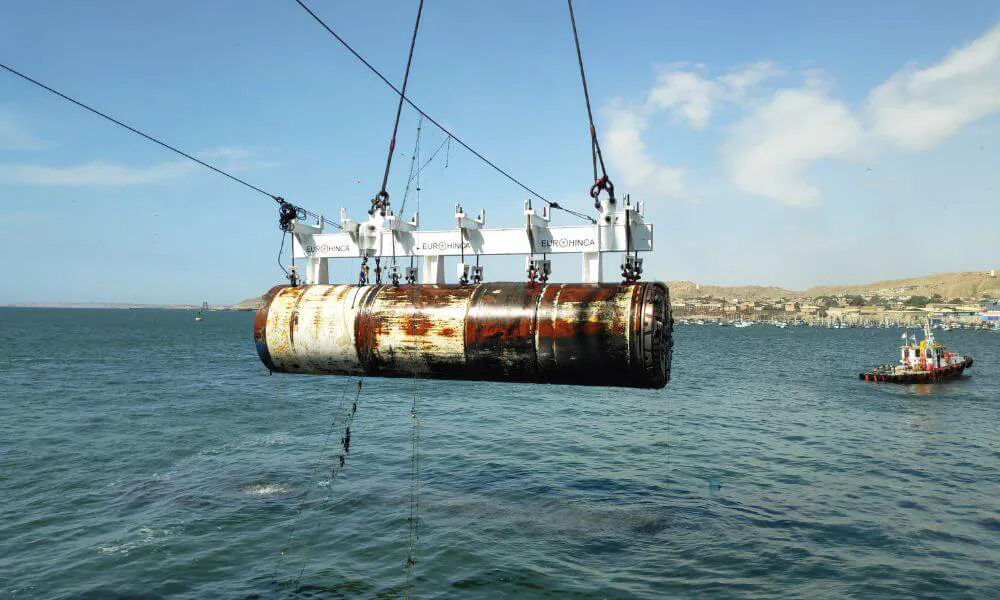
submerged applications

Choice of Tunnel Boring Machine

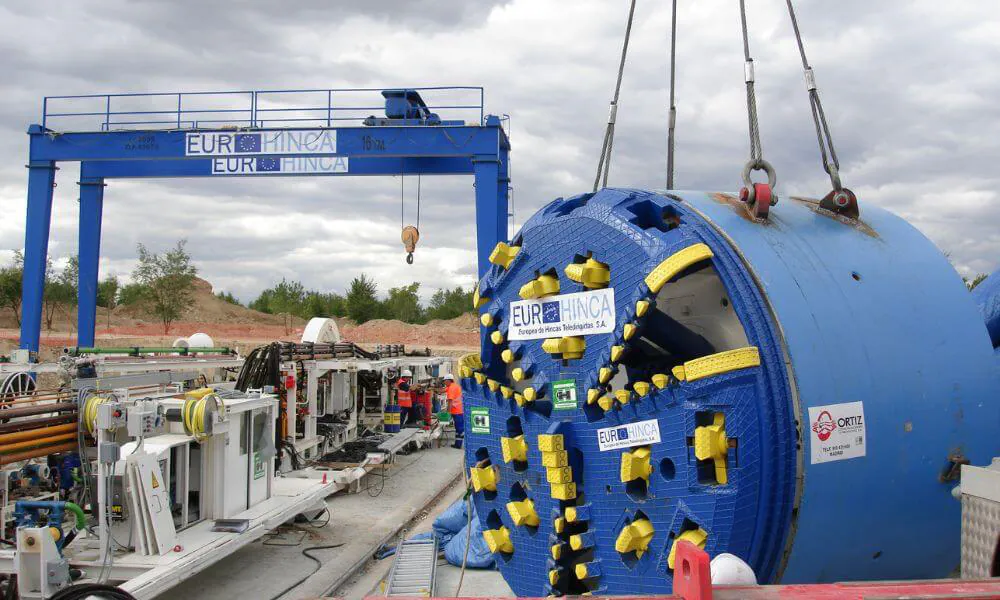
Having a good geological study is essential for the proper execution of a project. Based on the geology, the most appropriate drilling system will be chosen (with EPB TBM, Hydroshield, hard rock shield or open shield).

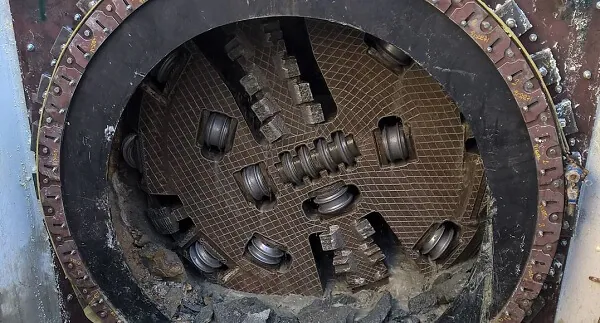
Likewise, the geology defines the type of cutting wheel to be installed in the TBM, the percentage of opening, the type of cutting tools, cutting discs, scrappers, as well as the durability of the tool to define the places to change them.

Thanks to the different drilling equipment we have at our disposal as well as the experience we have accumulated, we can offer you a wide variety of options.

TBM/MTBM selection service specifications

The choice of the appropriate TBM is a technical process that depends on the geotechnical, route requirements and the hydraulic or structural objectives of the project. Equipment selection is based on the following main parameters and criteria:

Type of project and required section: Determination of the diameter and type of tunnel to be built (non-visitable microtunnel, visitable tunnel, hydraulic conduit, service gallery or collector with segments).

Land conditions: Evaluation of cohesive soils, mixed soils, sands, gravels, transition to rock or presence of water table. This information defines if a head is required EPB, hydroshield (Slurry), open shield or a TBM for rock.

Front pressure and ground stability: Analysis of the need for pressure control to prevent settlement or soil loss, especially in saturated, urban or sensitive soils.

Alignment and curvature requirements: Straight or curved layout, minimum admissible radii, geometrical tolerances, slopes and depth of the conduction. This conditions the guidance system (laser, gyroscopic) and the type of joint or ring used.

Length of section and thrust logistics: Estimation of the thrust required, possibility of intermediate stations (in MTBM) and capacity of the hydraulic or continuous feed system according to the construction method planned.

Characteristics of the pipe or voussoirs: Type of final lining (steel, concrete, precast segments), compressive strength and structural behavior against ground loads and TBM thrust.

Civil works prerequisites: Dimensioning of attack and reception wells, launching portals or galleries, crane capacity, accesses for piping and auxiliary equipment, energy and ventilation.

Necessary auxiliary systems: Sludge plant, pumps, conveyors, lubrication, material extraction systems, welding (if metal piping) and HSE equipment for work in confined spaces.

Quality control and safety: Continuous monitoring of excavation parameters (torque, thrust, speed, pressure), trajectory tracking, liner inspection, as-built verification and compliance with HSE protocols in tunnels and shafts.

What they think of us

International Experience

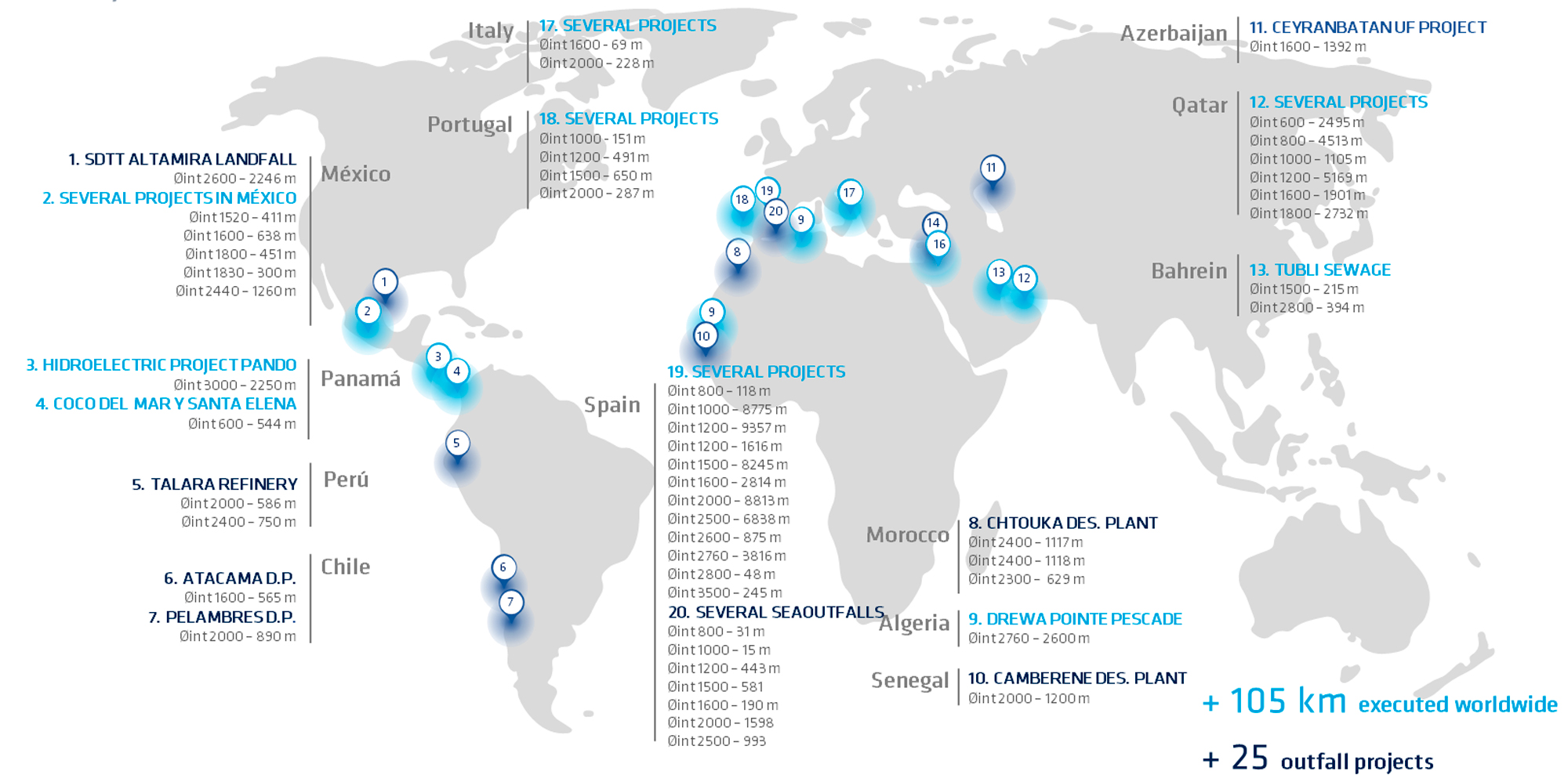
Projects around the world

From the Americas to Asia, Eurohinca develops microtunnelling, pipe jacking and subsea outfall projects in coastal, urban and industrial environments. Our global expertise allows us to offer safe, precise and sustainable solutions adapted to the most demanding conditions.
Find out more in our projects and works executed.

Choosing a tunnel boring machine: quick response

What is the choice of tunnel boring machine

The choice of TBM is the process of selecting the right machine. machine type and its configuration to execute a tunnel or microtunnel according to terrain, water, layout and project constraints. To understand the application context, please refer to the microtunnel.

When it is defined

It is defined when a preliminary layout already exists and sufficient information is available to compare excavation alternatives. At this stage it is often useful to review the equipment families, for example open shield y closed shield tunnel boring machines.

Key data

  • Preliminary layout and environmental conditions (crossings, accesses, restrictions).

  • Soil information available (geotechnical or references) and presence of water if known.

  • Purpose of the section (type of work and operating restrictions, if applicable).

Recommended information

  • Longitudinal profile and singular points (changes in elevation, sensitive areas, interferences).

  • Conditions that may condition the type of shield, e.g. EPB o hydro shield.

  • If the project is a junction with external constraints, you can provide context in the infrastructure crossings.

Request for information

Thank you for considering our company for your business proposals!

News that may interest you

Frequently asked questions about tunnel boring machines for tunnel excavation

What kind of tunnels can be built with a tunnel boring machine?

The tunnel boring machines are versatile and can be used to construct a variety of tunnels, including subway tunnels, road tunnels, tunnels for utilities such as water and sewer, and mining tunnels. The specific type of tunnel boring machine is selected based on the type of terrain and project requirements.

The type of terrain influences the choice of TBM, as different TBMs are designed for specific conditions. For example, closed shield TBMs are suitable for unstable ground, while EPB TBMs are ideal for soft ground. The right choice ensures efficient and safe excavation.

The excavated material by a tunnel boring machine is handled by a specialized system that includes conveyor belts or wagons. Once the TBM breaks through the ground, the spoil is collected and transported through these systems to the surface. There, the material can be processed or managed according to the needs of the project, ensuring a continuous and efficient flow during excavation.

To ensure the tunnel construction accuracyadvanced control and monitoring systems, such as lasers and leveling sensors, are used. These systems allow the alignment and profile of the tunnel to be adjusted and monitored during excavation, ensuring that it meets project specifications.

The duration of an excavation project The length of tunneling with a tunnel boring machine varies depending on the size of the tunnel, the type of terrain and the speed at which the tunnel boring machine advances. Small projects can take a few months, while larger, more complex projects can extend over years. The specific time is determined by the project conditions.

The maintenance of a tunnel boring machine during a project includes regular checks of the mechanical and cutting systems, as well as inspection of the muck conveyor systems. Technicians perform preventive and corrective maintenance to ensure that the TBM is working properly and to minimize the risk of failure during excavation.

Solve your doubts in our section of frequent questions.