
Open shield tunnel boring machines
Eurohinca (Europea de Hincas Teledirigidas, S.A.), Trenchless specialist since 1996 - 14 TBMs and >120 km executed.
The open shield is ideal in competent rock and granular soils with low water pressure: high performance and precise layout in crossings and service tunnels.
See segment tunnel, pipe ramming, choice of tunnel boring machine, technical assistance and engineering y references.
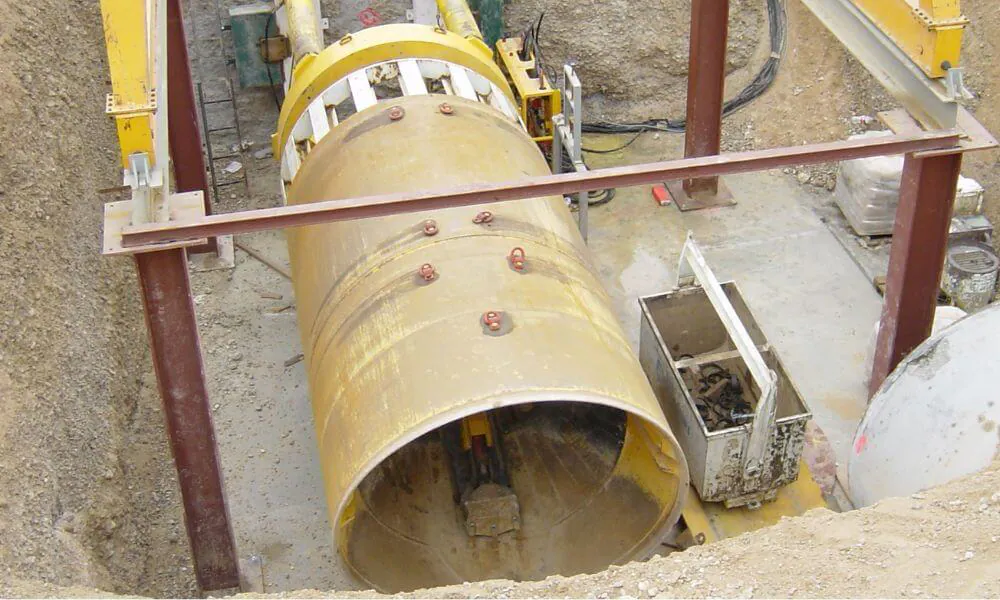
Execution of open shield tunnel boring machines (TBMs)
At EUROHINCA we use open shield tunnel boring machines in projects where the type of terrain allows excavation without the need to pressurize the face. This method allows direct visibility of the excavation face, which facilitates technical decision making in the field, ideal for stable or rocky environments.
Thanks to its versatility, this technology is used in projects such as infrastructure crossings o urban sewage systems, optimizing time and costs.
Open shield excavation process
During the excavation process, the open shield is precisely guided by means of alignment systems, pushing and extraction of the material by belts or wagons. It is a safe and adaptable technique that guarantees efficiency in sections with low risk of instability.
In longer or more complex sections, it can be combined with solutions such as intermediate stations or auxiliary methods of trajectory control.
📘 See also the ITA international handbook on trenchless technologies for more technical details.

Open shield service specifications
The open shield is a suitable solution for the excavation of microtunnels and galleries when the ground is sufficiently stable to maintain the face without the need for pressurized support. Its design and operation are defined by the following technical parameters:
• Main applications: Microtunnels in competent rock, cemented gravels or very stable soils; urban or interurban crossings where face pressurization is not required; and operations where direct visibility or personnel front access is advantageous.
• Compatible land conditions: Good quality rock, firm cohesive soils or materials with low tendency to crumble. Not for use in loose, saturated soils or soils with high water tables, where EPB or hydro-shielding is required.
• Diameters and feed lengths: Suitable for microtunnel diameters or small section tunnels, with lengths depending on the thrust system, ground resistance and support configuration.
• Construction method: Frontal excavation in open chamber, with the option of using mechanical cutting tools, hydraulic hammers or specific tools for rock. The advance is accompanied by the hydraulic thrust from the attack shaft and guidance by means of topographic or gyroscopic instruments.
• Removal of excavated material: Extraction by augers, buckets or mechanical systems depending on the nature of the ground. In rock, buckets or internal handling equipment can be used.
• Temporary support and coating: Depending on the project, the tunnel can be lined by means of a driven pipe (traditional ramming) or shoring and support systems according to the structural needs of the crossing.
• Civil works prerequisites: Construction of attack and reception shafts with adequate dimensions to house the shield, thrust systems, cutting tools, material extraction and auxiliary equipment.
• Quality control and safety: Supervision of face stability, thrust and torque logging, alignment control, proper ventilation, safe chamber access protocols and final verification of casing layout and condition.
What they think of us
Contractors, engineering companies and public entities highlight EUROHINCA's reliability and performance in open shield execution, even in complex logistical conditions.
 Publicado en Google
 Carlos Vasconcello26 Enero 2026
 Publicado en Google
 Tidiane Ba17 Septiembre 2025BienPublicado en Google
 Marcelo Virgili27 Septiembre 2024Publicado en Google
 SERGIO ROJAS ROJAS16 Julio 2024Publicado en Google
 Dany Fernandez Vazquez14 Julio 2022Publicado en Google
 Victor Cabeza19 Marzo 2021Publicado en Google
 Eduardo18 Diciembre 2018Publicado en Google
 JuanK mesa17 Noviembre 2017

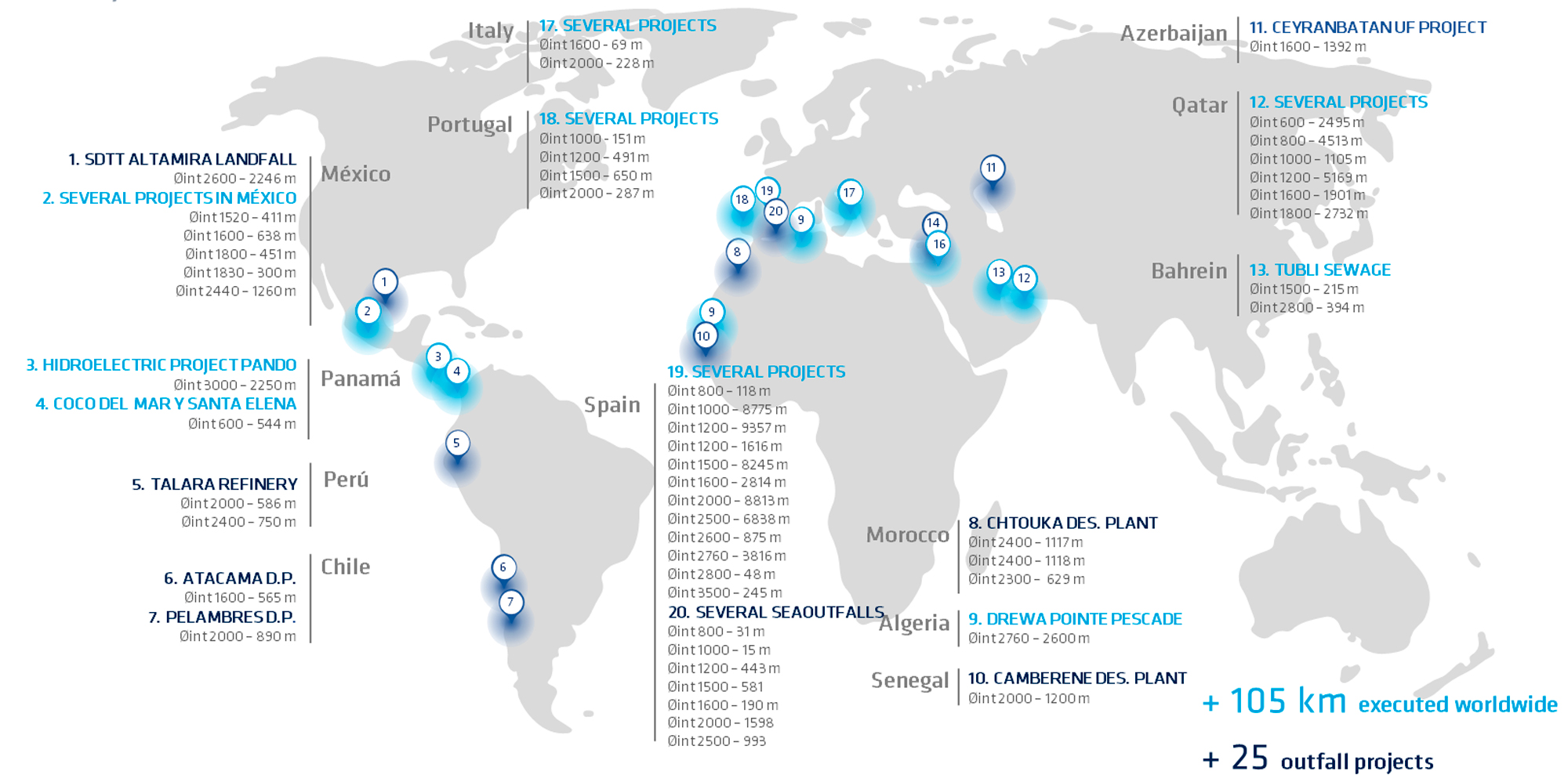
Projects around the world
From the Americas to Asia, Eurohinca develops microtunnelling, pipe jacking and subsea outfall projects in coastal, urban and industrial environments. Our global expertise allows us to offer safe, precise and sustainable solutions adapted to the most demanding conditions.
Find out more in our projects and works executed.
Open shield: quick response
What is an open shield
A open shield is a type of TBM/microtunneling machine in which the excavation face works in an “open” way, and the choice of equipment is related to the ground conditions and project constraints. For the general selection framework, it can help you choice of tunnel boring machine.
When to use
It is used when the project and the terrain allow working with an open front and the construction approach is compatible with the layout and environment constraints. To compare with other families of equipment, please review closed shield tunnel boring machines.
Key data
Preliminary layout and environmental conditions (crossings, access, occupation, services).
Soil information available (geotechnical or references) and presence of water if known.
Purpose of the section (type of infrastructure to be executed) and relevant project restrictions.
Recommended information
Longitudinal profile and singular points of the layout (if any).
Criteria for equipment selection based on typical conditions: EPB y hydro shield as closed shield alternatives, as the case may be.
If the project is framed in crossroads, it can provide context infrastructure crossings.
Request for information
Looking for an economical and reliable solution to excavate without affecting the surface?
We help you to assess whether the open shield is the most suitable option for your site.
News that may interest you
Open shields in rocky soils: strategies to minimize fracturing
Working with open shields in rock massifs combines the most demanding cutting mechanics with the advantage of being able to evacuate
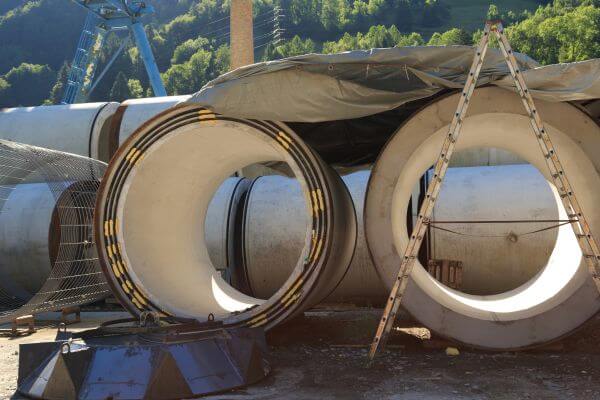
Competitive advantages of microtunneling in infrastructure projects
In an environment where the construction of infrastructure increasingly demands more efficient and sustainable solutions, microtunneling
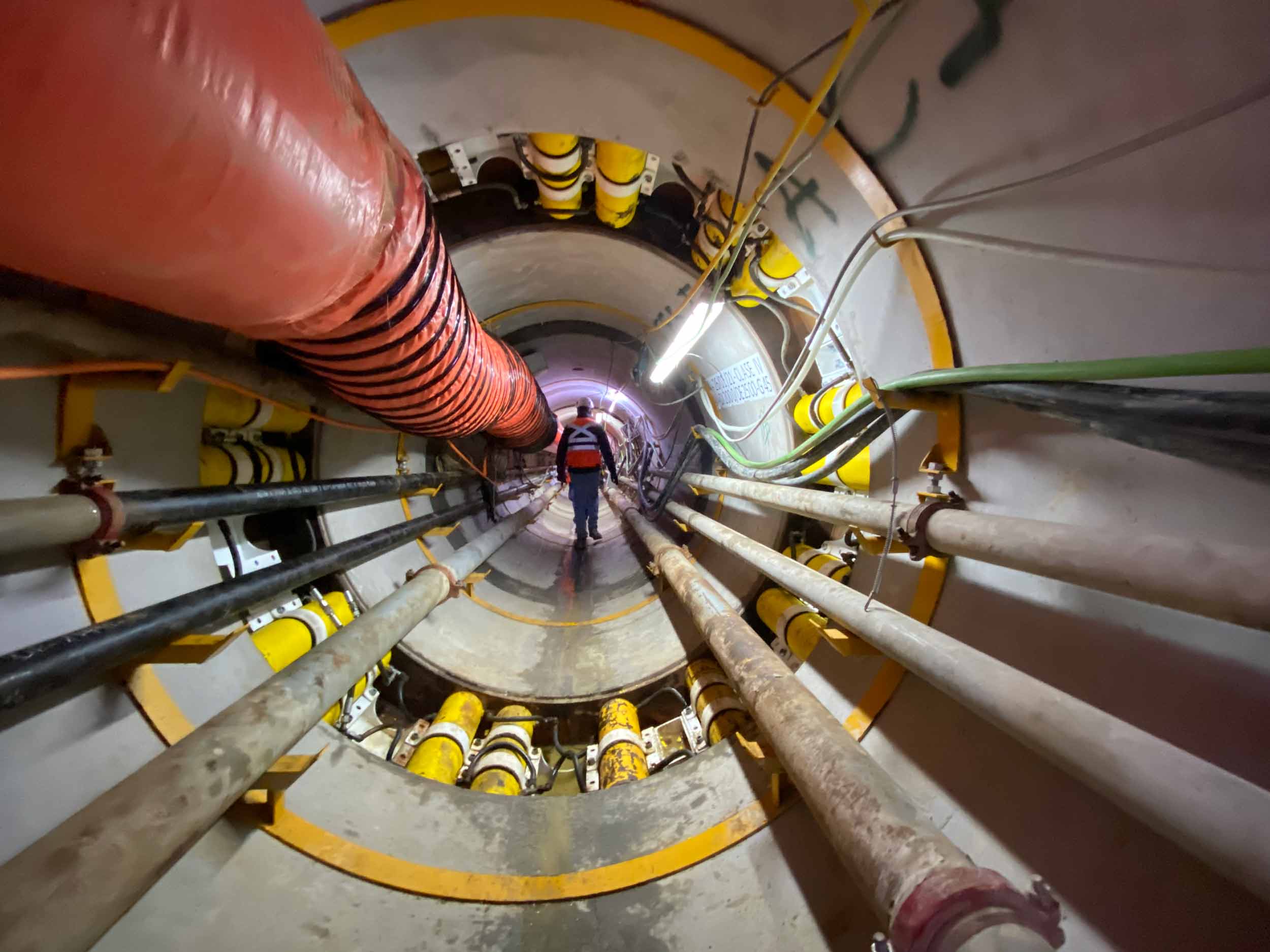
From pipe jacking to tunnel boring machine: Key tools in project execution
In subway construction, the evolution of techniques and machinery is essential to carry out projects with quality, safety
Frequently asked questions about open shield TBMs
We answer your most frequent questions about this type of technology, its practical application and technical benefits.
What is an open shield ramming?
Open shield drilling is an excavation technique in which a specialized shield is used to drill into the ground. The shield is equipped with a drilling element adapted to the type of ground, such as a bucket, miner or pickaxe, and allows excavations to be carried out in a controlled and safe manner.
How to select the type of drilling element for the shield?
The type of drilling element is selected according to the characteristics of the ground to be excavated. It is chosen between bucket, miner, pickaxe, among others, depending on factors such as the hardness of the soil, the presence of rocks or the composition of the ground, to ensure effective drilling.
How is the extraction of material during excavation performed?
The extraction of material is carried out by using wagons that transport the excavated material out of the work area. The shield advances as the wagons are filled and removed, maintaining a continuous flow of material and avoiding excessive accumulation in the excavation area.
What technologies are used to guide the shield during excavation?
Guidance cylinders are used to guide the shield, allowing the direction of the shield to be precisely adjusted. In addition, a laser system is used to hit a target and levels to indicate the trend of the excavation, ensuring that the shield remains aligned and in the correct direction.
What are the advantages of using an open shield in excavation?
The use of an open shield allows for efficient and controlled excavation, adapting to different types of terrain and minimizing the impact on the environment. The technique provides greater stability during excavation, reduces the risk of collapse and allows work to be carried out safely in urban or congested environments.
What are the main challenges of using the open shield technique?
The main challenges include the need for accurate selection of the drilling element according to the terrain, managing the stability of the surrounding ground and coordinating the material removal process. In addition, the technique requires rigorous control through guidance technologies to maintain accuracy during excavation.
Solve your doubts in our section of frequent questions.
 Español
  English
  Français