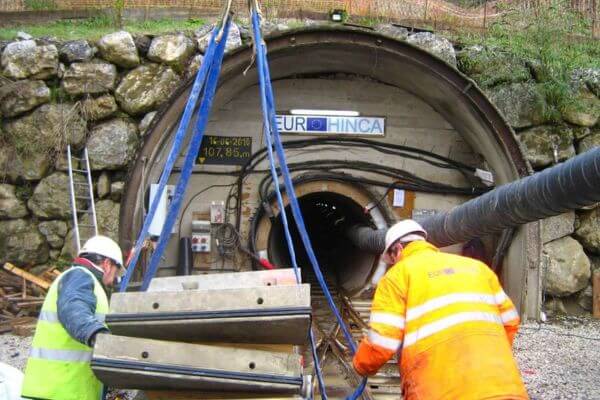
What type of tunnels are most suitable for storm drainage works?
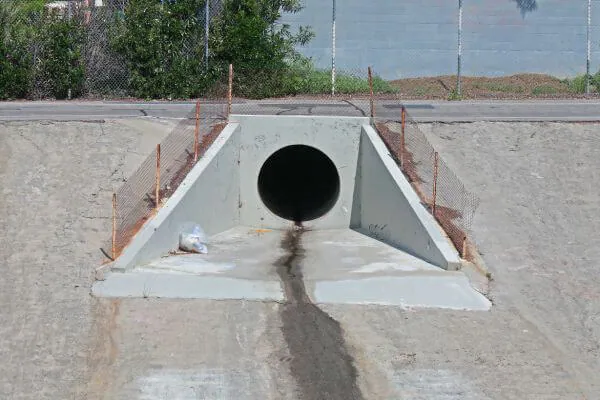
Stormwater drainage works require efficient and sustainable solutions for stormwater management and prevention
Eurohinca (Europea de Hincas Teledirigidas, S.A.), Trenchless specialist since 1996 - 14 TBMs and >120 km executed.
We design and execute seawater harvesting systems for desalination with microtunneling (MTBM), HDD y Direct Pipe — Target flow rate, minimum turbidity, and compliance with ISO 9001/14001/45001. View seawater catchments y submarine emissaries.

At Eurohinca, we are experts in the construction of seawater collection systems, essential for the operation of desalination plants. We use advanced technologies to guarantee a continuous and efficient water supply, optimizing the desalination process. With more than 20 years of experience, we ensure that our projects are sustainable and adapted to the specific needs of each client, guaranteeing the quality and durability of the infrastructures.
Eurohinca excels in the implementation of seawater harvesting systems, using trenchless excavation methods to minimize environmental impact. Our systems are designed to improve the performance and efficiency of desalination plants, ensuring an effective and sustainable desalination process. With a focus on advanced technology and expert engineering, we provide reliable solutions that meet the highest quality standards on every project.

Seawater intake systems for desalination plants require reliable, precise construction solutions that have minimal impact on the coastal environment. Trenchless technologies enable the construction of deep intakes, subsea pipelines, and feed tunnels with high hydraulic and environmental safety. This service is defined by the following technical parameters:
• Main applications: Intake tunnels and microtunnels, pipelines carrying water to the plant, intake wells, underwater inlets, connections to pretreatment galleries, and crossings under beaches, boardwalks, or port areas.
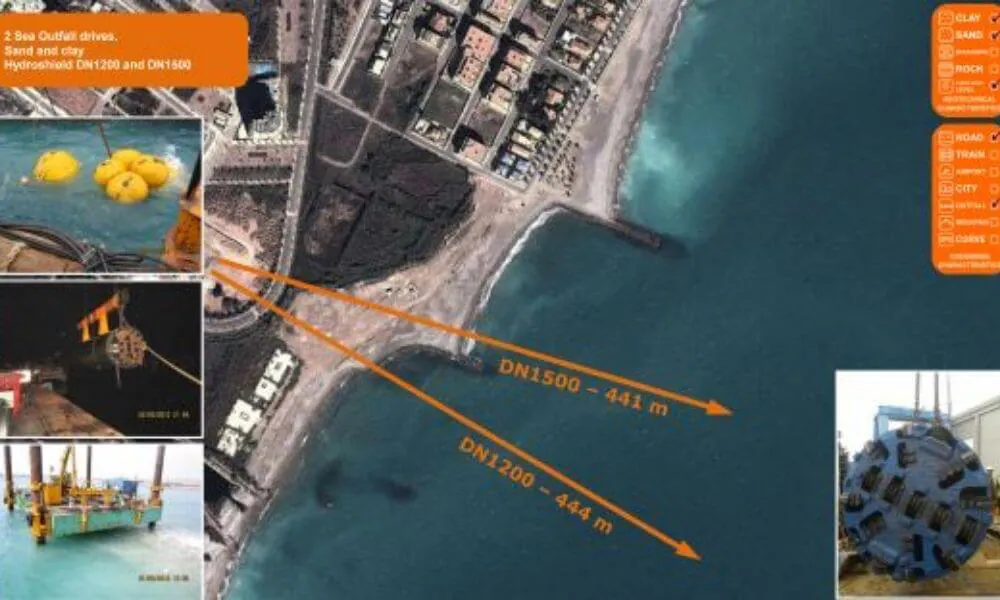
• Construction methods used: Ground-controlled remote-operated microtunneling, pipe jacking, Direct Pipe® for steel pipelines, and ancillary civil engineering work for intake wells and intake structures. For offshore sections, integration with mooring and underwater maneuvering systems.
• Terrain and coastal environment conditions: Coastal soils, saturated sands, alluvial deposits, and a constant water table. High pressures, permeability, coastal dynamics, and the potential for sediment intrusion into the pipeline are taken into account.
• Required diameters and flow rates: Selected based on the desalination plant’s design flow rates. The conduits may be non-accessible (concrete, steel, or HDPE pipes) or accessible tunnels in higher-capacity projects.
• Typical lengths of water intakes: Sections ranging from tens of meters below the shoreline to several hundred meters out to sea, depending on the distance from the intake area, water quality, and the geotechnical characteristics of the coastal platform.
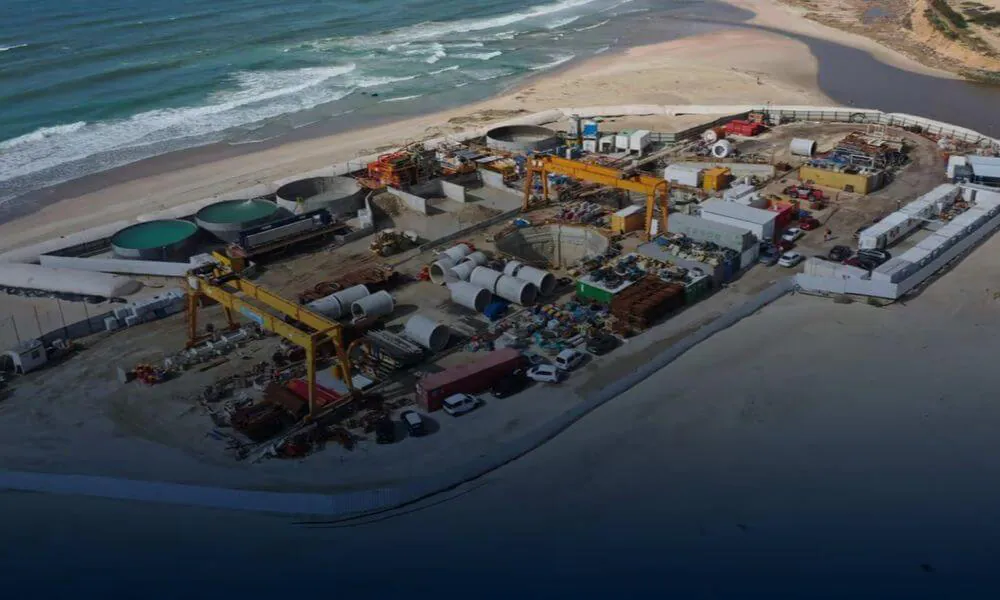
• Civil works requirements: Intake and collection wells, offshore platforms, access points for heavy machinery, space for a sludge treatment plant and pumping equipment, as well as safe areas for the fabrication, welding, or assembly of large-diameter pipes.
• Integration with underwater construction: Coordination with marine work crews for connecting the intake, installing diffusers or inlet structures, final alignment, and verification through underwater inspection or ROV.
• Water Quality and Sediment Control: Design of the intake system to prevent the ingress of sand or solids, thereby maintaining the efficiency of the desalination plant’s pretreatment process and reducing maintenance and wear.
• Quality control and verification: Monitoring of face pressure, thrusts, advance, excavated volume, and alignment during tunnel or microtunnel construction; CCTV inspection, watertightness tests, and geometric verification of the alignment. In marine construction, verification of the alignment and stability of the pipeline.

Publicado en Google Carlos Vasconcello26 Enero 2026 Publicado en Google Tidiane Ba17 Septiembre 2025 BienPublicado en Google Marcelo Virgili27 Septiembre 2024 Publicado en Google SERGIO ROJAS ROJAS16 Julio 2024 Publicado en Google Dany Fernandez Vazquez14 Julio 2022 Publicado en Google Victor Cabeza19 Marzo 2021 Publicado en Google Eduardo18 Diciembre 2018 Publicado en Google JuanK mesa17 Noviembre 2017
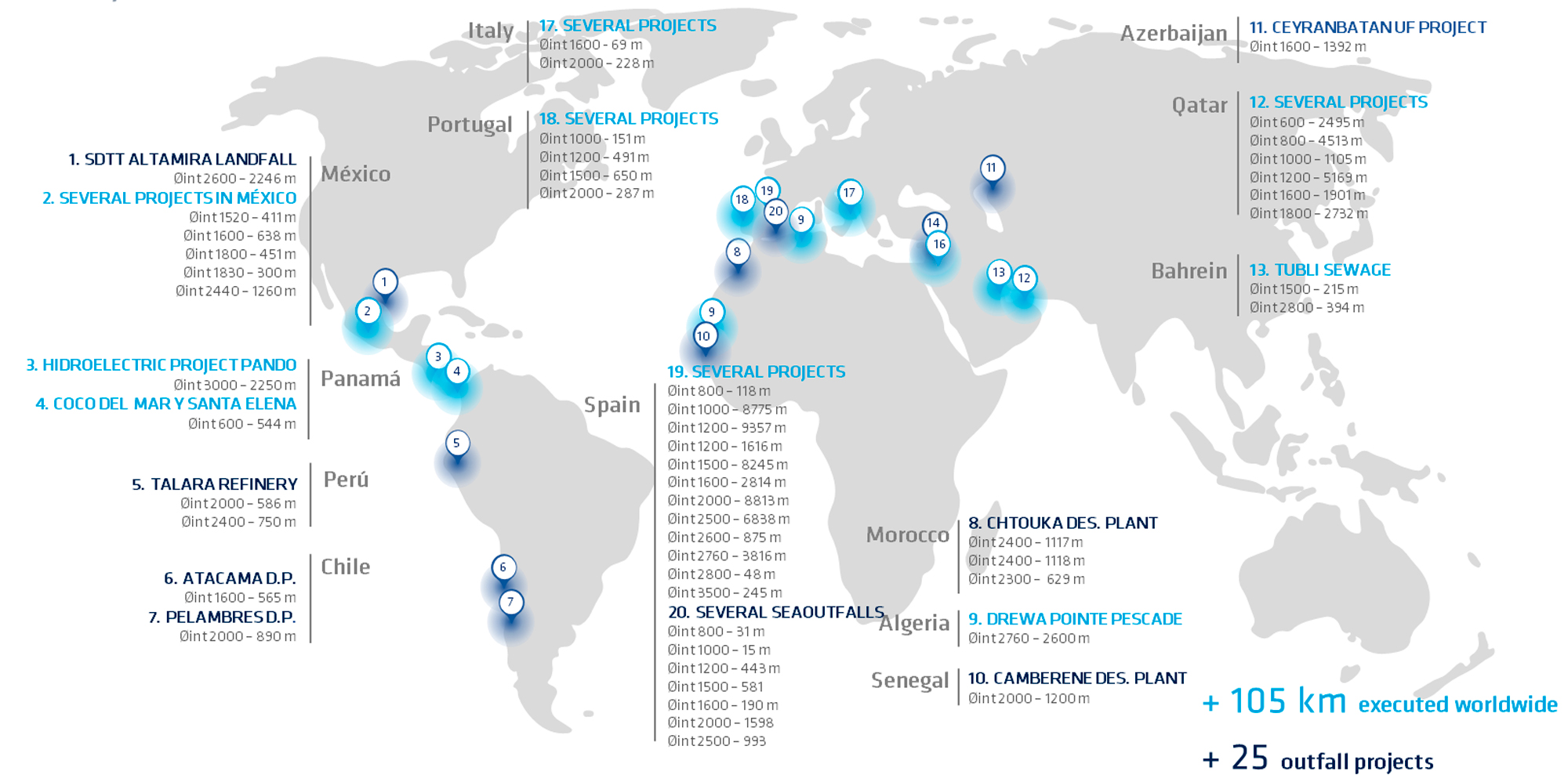
From the Americas to Asia, Eurohinca develops microtunnelling, pipe jacking and subsea outfall projects in coastal, urban and industrial environments. Our global expertise allows us to offer safe, precise and sustainable solutions adapted to the most demanding conditions.
Find out more in our projects and works executed.
A seawater intake system for desalination is the set of infrastructure necessary for to draw seawater and transport it to a desalination plant. This typically includes the route from the intake point to shore and its connection to the facility. In terms of application context, it may relate to sea water catchments and with submerged applications.
This is used when a project requires securing a intake point in the marine environment and a pipeline route to the plant, subject to constraints related to location, access, easements, and permits. Depending on the environment, there may be sections comparable to submarine emissaries (based on the type of installation—coastal or offshore).
Approximate location and purpose (water intake for desalination and connection to the plant).
Sketch or map with a preliminary layout and start/end points (sea–land).
Known environmental restrictions (easements, access points, and construction limitations).
Available documentation on the site (background information, existing plans, references).
Requirements of the owner/authority or operator, if applicable.
If the route requires sections to be constructed on land using the trenchless method, this can provide context microtunnel y Direct Pipe.

Stormwater drainage works require efficient and sustainable solutions for stormwater management and prevention

In the field of subway engineering, segmental tunnels stand out as an essential solution for large-scale projects.

Horizontal directional drilling (HDD) has become an essential technique for subway crossings in infrastructure projects.
A seawater harvesting system is an infrastructure designed to collect water from the sea and supply it to desalination plants, where salt water is converted into drinking water through the desalination process.
It is crucial because it provides a continuous and reliable source of seawater for desalination plants, ensuring a constant supply of potable water in regions with freshwater shortages.
Eurohinca uses advanced trenchless excavation technologies and closed shield tunnel boring machines, which allow for precise installation and minimize environmental impact during the construction of seawater intake systems.
Eurohinca guarantees sustainability by using construction methods that reduce environmental impact, optimize the use of resources and ensure the long-term efficiency of desalination plants and the desalination process.
Trenchless excavation minimizes surface disruptions, reduces costs and construction time, and reduces environmental impact, making the installation of seawater harvesting systems more efficient and sustainable.
With more than 20 years of experience and numerous projects completed internationally, Eurohinca is a leader in the construction of seawater harvesting systems, offering innovative and high quality solutions for desalination plants.
Solve your doubts in our section of frequent questions.