What role do tunnels play in water supply and desalination systems?
Tunnels play an essential role in water supply and desalination systems, enabling the efficient and efficient transport of water from one place to another.
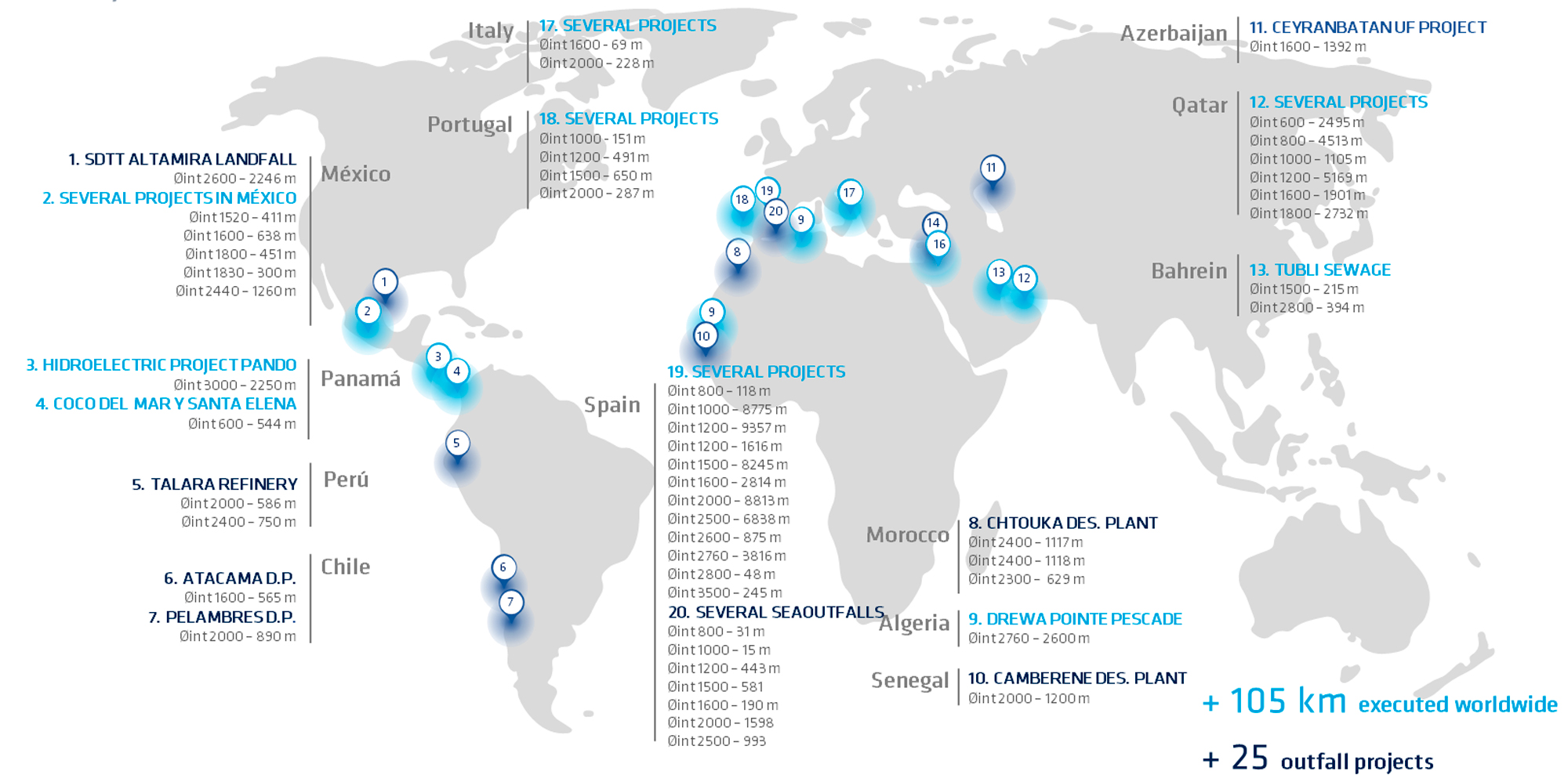
Eurohinca (Europea de Hincas Teledirigidas, S.A.), Trenchless specialist since 1996 - 14 TBMs and >120 km executed.
We run dam spillways and conduits associated with microtunneling (MTBM), segment tunnel, vertical wells y HDD — precise layout, pressure and leak testing, and minimal impact on civil engineering work.
See references.

At Eurohinca, we specialize in the construction of drainage channels for dams, ensuring precise flow control and the structural stability of the project. Thanks to our experience in river crossings y gas pipeline tunnels, we implement solutions that combine safety, durability, and efficiency in every hydraulic project.
Our systems incorporate methods of excavation using tunnel boring machines and trenchless techniques, reducing environmental impact and optimizing timelines. The experience gained in urban supply systems y drainage works It allows us to offer reliable solutions tailored to each environment.

Dam spillways, discharge tunnels, and associated underground conduits require construction technologies that ensure high precision and minimal impact on the dam structure and its surroundings. Trenchless methods allow for the construction of tunnels and pipelines with geometric control, stable tunnel faces, and strict compliance with hydraulic regulations. This service is defined by the following technical parameters:
• Main applications: Bottom drainage tunnels, auxiliary conduits, hydraulic bypasses, drainage galleries, relief conduits, underground crossings beneath abutments or foundations, and connections to valve chambers or sluice gates.
• Construction methods used: Remote-controlled microtunneling, driving steel or concrete pipes, Direct Pipe® for pressure pipelines, and mechanized tunneling in rock when conditions require it. The choice is based on geotechnical conditions, water pressure, and the dam’s location.
• Ground Conditions and Stability: Alluvial deposits, mixed soils, or rock around the reservoir or abutment. Permeability, fracturing, the water table, hydraulic gradients, and potential preferential flow paths are taken into account.
• Structural Safety Requirements: The work must avoid placing additional loads on the dam, interfering with its foundations, or altering the seepage regime. Elevations, depths, and alignments are designed in coordination with the dam engineering team.
• Diameters and working pressures: Steel or concrete pipes designed to withstand the high hydraulic pressures associated with bottom drainage or emergency operations. In accessible tunnels, segmental linings or specific solutions for hydraulic stresses are used.
• Typical section lengths: From short crossings under adjacent structures to tunnels several tens or hundreds of meters long to connect valve chambers, drains, or downstream discharge points.
• Civil works requirements: Tunnel portals and reception chambers located outside the dam's structural influence zone, safe access points, work platforms, a slurry plant, ventilation, and areas for handling steel pipes or lining elements.
• Pressure control and front stability: In saturated soil or where the water table is high, closed shields (EPB or slurry) are used; in rock, specialized drill heads are used to ensure stability and minimize vibrations.
• Quality Control and Regulations: Continuous monitoring of thrust, torque, face pressure, alignment, and excavated volume. Leak testing, CCTV inspection, geometric control, and as-built documentation in accordance with hydraulic regulations and the requirements of the managing agency.
• Safety and Operation: Enhanced HSE protocols in the vicinity of dams, atmospheric monitoring, safe access to wells, pumping management, and ensuring that construction does not affect dam operations or the safety of the infrastructure.

Publicado en Google Carlos Vasconcello26 Enero 2026 Publicado en Google Tidiane Ba17 Septiembre 2025 BienPublicado en Google Marcelo Virgili27 Septiembre 2024 Publicado en Google SERGIO ROJAS ROJAS16 Julio 2024 Publicado en Google Dany Fernandez Vazquez14 Julio 2022 Publicado en Google Victor Cabeza19 Marzo 2021 Publicado en Google Eduardo18 Diciembre 2018 Publicado en Google JuanK mesa17 Noviembre 2017
Our international experience includes drainage projects in complex environments, where we tailor our engineering solutions to specific technical and environmental conditions.
You can find out more in the works performed.
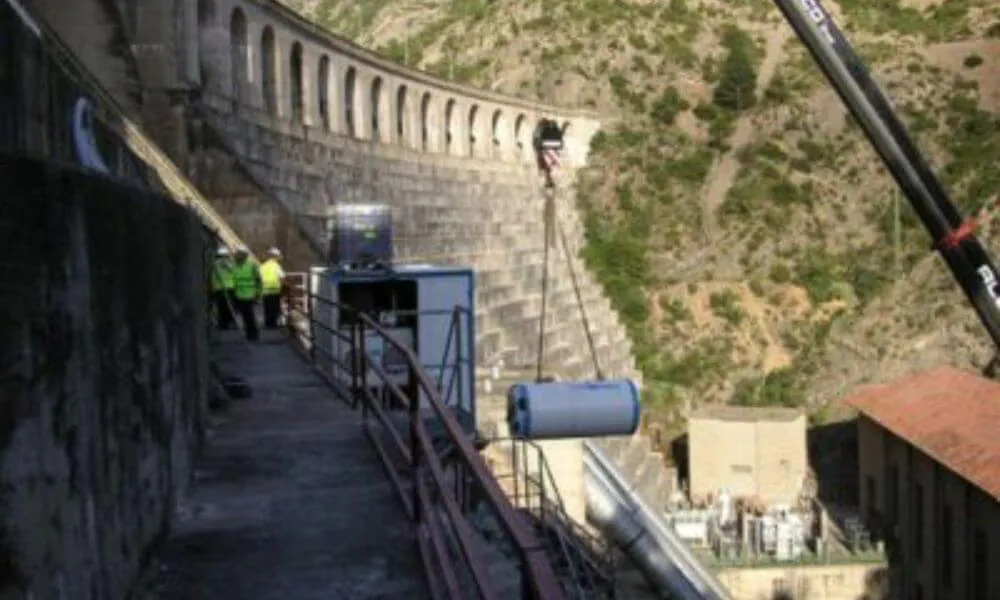
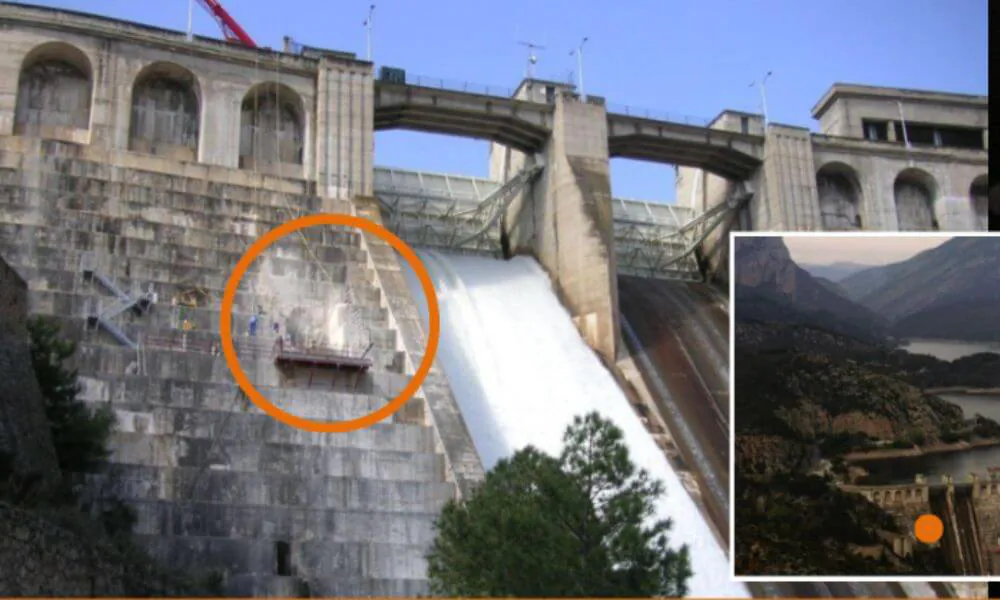
Dam spillways are structures associated with conduits connected to the water management and drainage at dams, where the design and construction are often influenced by the surrounding environment and by operational and permitting requirements. This type of work may involve submerged applications when work is being performed in an underwater environment.
They are used when a project requires work to be performed on or intervention in a section associated with a dam that has access limitations, construction restrictions, and requirements set by the owner/operator. For other types of crossings, it may be helpful to review river and watercourse crossings.
Approximate location and objective (what you want to install or resolve).
Sketch or plan with preliminary layout and start/end points.
Known environmental restrictions (access, occupancy, construction limitations).
Requirements for the owner/operator (if applicable) and any available documentation.
Identification of main conditioning factors.
Short list of missing information (if any) and recommended next steps.
If you want to move forward with a query, you can do so from Contact.
On the blog of Eurohinca News We share success stories, technical advances, and best practices in hydraulic and underground engineering projects.

Tunnels play an essential role in water supply and desalination systems, enabling the efficient and efficient transport of water from one place to another.

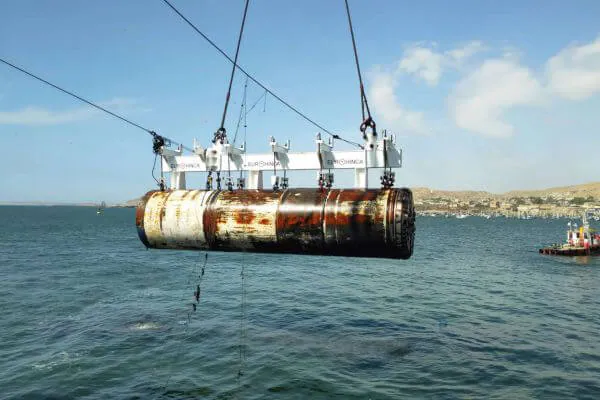
Submarine outfalls are essential infrastructures in effluent management, allowing the discharge of treated water into the open sea.

Submarine outfalls are an essential part of the sewerage and water management infrastructure in many urban areas.
In the section on frequent questions We answer questions about the materials, maintenance, and durability of spillways, as well as their role in dam safety.
A dam outlet is a system of pipes or channels designed to control and direct the flow of water from a dam. Its main function is to allow the safe evacuation of water stored in the dam, preventing overflows and managing excess water, especially during heavy rains or snowmelt.
Adequate drainage construction is crucial to ensure the security. y efficiency of the dam. Inadequate design can lead to problems such as overtopping, soil erosion, and structural damage. Well-constructed spillways ensure a controlled flow of water and minimize the risk of failure of the dam structure.
Dam spillways are constructed using durable and resistant materials, such as polyethylene pipes, reinforced concrete y stainless steel. These materials are designed to withstand water pressure and extreme environmental conditions, ensuring long life and reliable performance.
The installation of a weir drain generally follows these steps:
Dam drains require periodic maintenance to ensure proper operation. This includes:
To ensure the durability of dam drains, several measures are taken:
Solve your doubts in our section of frequent questions.