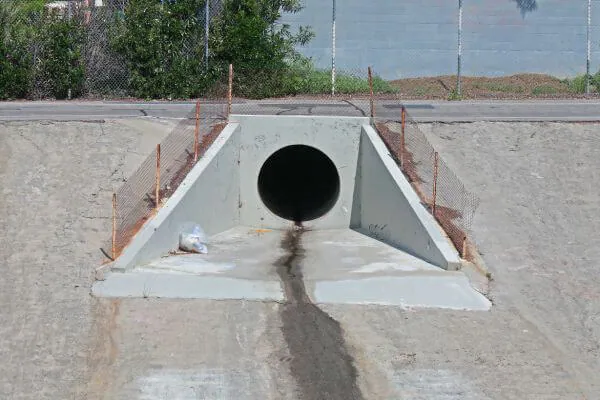
What type of tunnels are most suitable for storm drainage works?
Stormwater drainage works require efficient and sustainable solutions for stormwater management and prevention
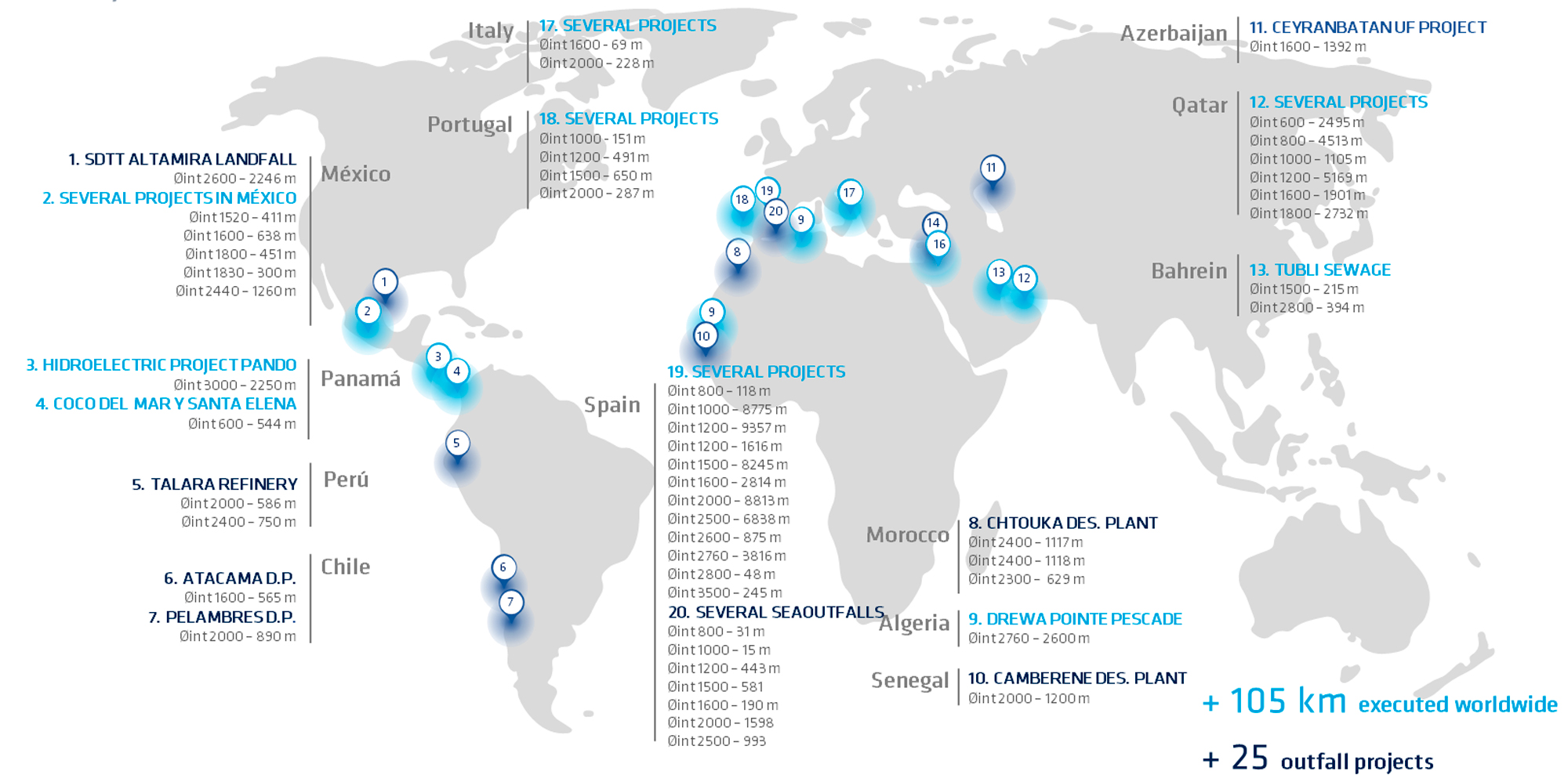
Eurohinca (Europea de Hincas Teledirigidas, S.A.), Trenchless specialist since 1996 - 14 TBMs and >120 km executed.
We run drainage works and hydraulic crossings with microtunneling (MTBM), HDD y Direct Pipe, integrated with civil work — hydraulic capacity, scour control, and minimal disruption to traffic and services. See references.

At Eurohinca, we specialize in the construction of tunnels intended for drainage works, using trenchless excavation techniques that ensure safe and sustainable water management. These systems are essential in projects involving urban sewage systems and in complex civil engineering projects, where the ability to safely manage stormwater and wastewater flows is key to the resilience of cities.
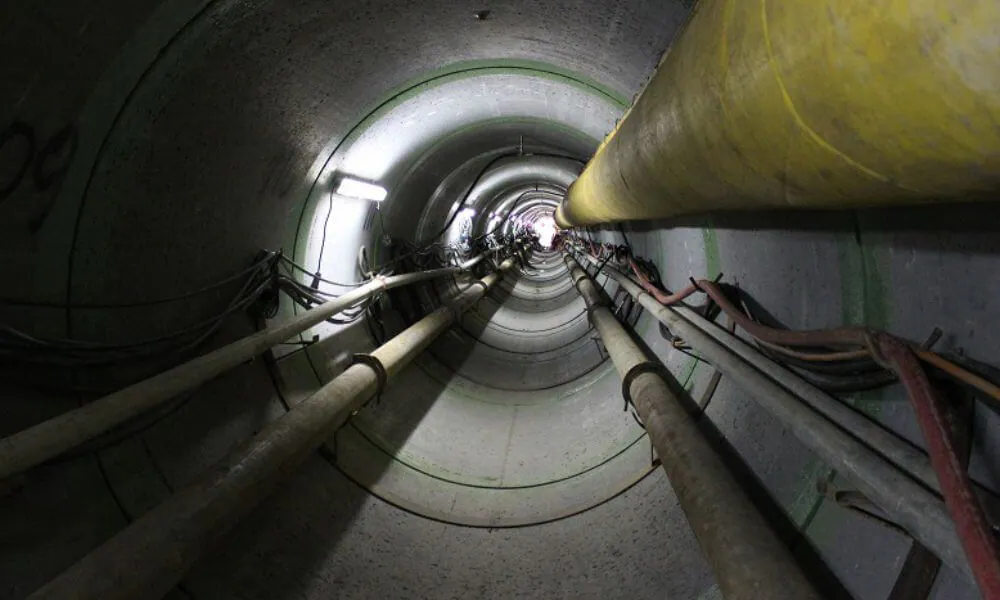
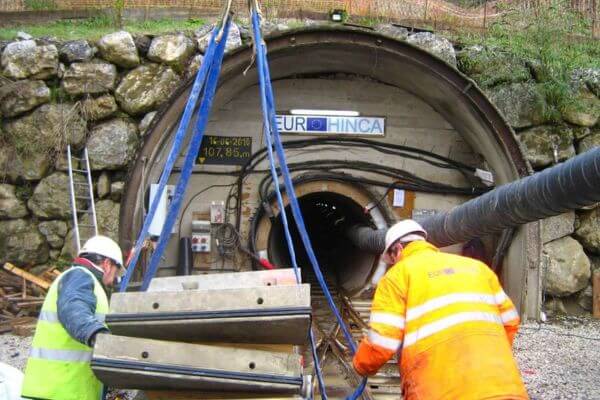
Drainage tunnels allow for the channeling of stormwater and wastewater through advanced solutions for pipe ramming, Direct Pipe o closed shield tunnel boring machines.
Thanks to these technologies, we reduce the risk of flooding in urban areas and improve the sustainability of the wastewater system.
In addition, in large-scale projects, drainage tunnels are integrated with critical infrastructure such as river and watercourse crossings o submarine emissaries.

Urban, industrial, and infrastructure drainage projects require precise, durable construction solutions with minimal surface impact. Trenchless technologies allow for the installation of collectors, deep drains, and underground pipelines with geometric control and full hydraulic functionality. This service is defined by the following technical parameters:
• Main applications: Deep drainage systems, relief collectors, pipelines under roads or industrial areas, longitudinal drainage systems on roads, underpasses beneath infrastructure, capacity expansion of existing networks, and connections between drainage wells.
• Construction methods used: Remote-controlled microtunneling for non-accessible sewers, pipe jacking when depth or access requires it, and HDD for specific routes where gentle curves or limited access are required.
• Diameters and materials: Pipes made of concrete, vitrified clay, steel, or HDPE, depending on the required hydraulic capacity, structural strength, and the regulations of the municipality or managing authority. Diameters are determined based on design flow rates and the slope required for gravity flow.
• Soil conditions and water table: Systems compatible with cohesive, mixed, and stabilized granular soils. In areas with high groundwater levels, closed shields (EPB or slurry) are used to maintain face stability and prevent soil loss.
• Slope Control and Hydraulic Capacity: Drainage systems require specific slopes to ensure efficient water flow without pooling or reverse slopes. Laser or gyroscopic guidance ensures strict tolerances for elevation and alignment.
• Lengths and geometry: Short and medium-length sections in urban areas, crossings under roads or industrial platforms, and longer runs in main drainage channels. The pipeline can be laid in a straight line or with gentle curves when the method allows.
• Civil works requirements: Manholes and receiving chambers adapted to the diameter of the drainage system, work platforms, access points, collection areas, and a sludge treatment plant. The project is designed to minimize disruption to traffic and urban activities.
• Integration with existing networks: Connection to existing drainage systems, adherence to manhole elevations, coordination with underground utilities (water, gas, electricity, telecommunications), and protection of sensitive infrastructure.
• Quality Control and Final Inspection: CCTV inspection, leak tests, geometric checks of alignment and slope, recording of excavation parameters, monitoring of earth pressure and excavated volume, and delivery of as-built documentation.

Publicado en Google Carlos Vasconcello26 Enero 2026 Publicado en Google Tidiane Ba17 Septiembre 2025 BienPublicado en Google Marcelo Virgili27 Septiembre 2024 Publicado en Google SERGIO ROJAS ROJAS16 Julio 2024 Publicado en Google Dany Fernandez Vazquez14 Julio 2022 Publicado en Google Victor Cabeza19 Marzo 2021 Publicado en Google Eduardo18 Diciembre 2018 Publicado en Google JuanK mesa17 Noviembre 2017
Eurohinca has carried out drainage projects in Europe, Latin America, and Asia, always implementing solutions tailored to the conditions of each site.
These projects ensure the safe drainage of stormwater and wastewater in high-density urban areas.
In fact, international institutions such as the World Bank They emphasize that the implementation of sustainable urban drainage systems is key to reducing the impact of flooding and strengthening cities' resilience to climate change.
The drainage works These are actions aimed at pick up, transport, or evacuate water (such as stormwater or runoff) to control accumulation, prevent damage, and ensure the proper hydraulic functioning of an area or infrastructure. In many cases, these involve networks and intersections that require the design of sections under specific environmental constraints.
They are used when it is necessary to manage rainwater or runoff in urban, industrial, or infrastructure-related settings, especially if there are traffic restrictions, easements, or interference with utilities. If the drainage system involves passing through existing structures, it may be related to infrastructure crossings o river and watercourse crossings.
Approximate location and objective (collection, conveyance, relief, evacuation).
Sketch or plan with a preliminary layout and connection points.
Known environmental restrictions (access, occupancy, hours, interference).
Available documentation on the site (existing plans, background information, constraints).
Requirements of the owner/operator or administration (if applicable).
If the project requires the construction of underground sections using trenchless methods, this can provide context microtunnel y pipe ramming.
In our section on news We share experiences, innovations, and analyses related to drainage projects and other underground projects. Here, you can discover trends that are transforming water management in modern cities.

Stormwater drainage works require efficient and sustainable solutions for stormwater management and prevention

In the field of subway engineering, segmental tunnels stand out as an essential solution for large-scale projects.

Horizontal directional drilling (HDD) has become an essential technique for subway crossings in infrastructure projects.
In our section on frequent questions We provide clear and practical answers to the most common questions about the techniques, benefits, and application of drainage tunnels.
Drainage works are infrastructures designed to manage and control the flow of rainwater and wastewater, preventing flooding and improving water quality in urban and rural areas.
They are crucial to prevent flooding, protect infrastructure and ensure public safety. They help manage water efficiently, reducing the risk of storm damage and improving quality of life.
Eurohinca uses advanced technologies such as trenchless excavation and efficient piping systems to build robust and sustainable drainage infrastructure, minimizing environmental impact.
Modern technologies ensure accurate and fast installation, reduce costs and construction time, and minimize environmental impact. They also improve the durability and efficiency of the drainage system.
Eurohinca has a team of expert engineers and uses state-of-the-art equipment to ensure that each project meets the highest standards of quality and safety.
Eurohinca builds a variety of drainage systems, including open channels, subway pipelines and sewer systems, tailored to the specific needs of each project and environment.