What role do tunnels play in water supply and desalination systems?
Tunnels play an essential role in water supply and desalination systems, enabling the efficient and efficient transport of water from one place to another.
Eurohinca (Europea de Hincas Teledirigidas, S.A.), Trenchless specialist since 1996 - 14 TBMs and >120 km executed.
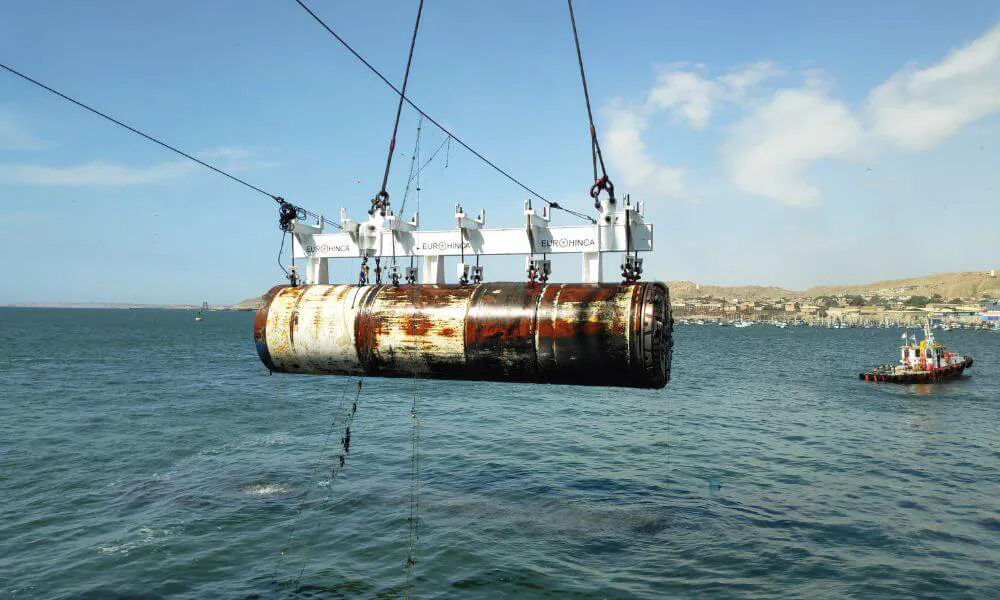
We run submerged applications: submarine emissaries y seawater catchments with microtunneling (MTBM), HDD y Direct Pipe — Target throughput, minimal impact, and compliance with ISO 9001/14001/45001.

Eurohinca's submerged applications include advanced solutions such as submarine emissaries, dam spillways, seawater catchments o crossings of marine protected areas. All of these projects are carried out using trenchless excavation technologies adapted to demanding marine environments. For more information, please visit our section on news and answer your questions at frequent questions.
Underwater applications encompass activities in underwater environments related to infrastructure such as submarine emissaries, seawater catchments, dam spillways and works in marine protected areas.
They are used when the project is carried out in an underwater environment and is constrained by the location, route, and environmental restrictions.

We offer a variety of specialized solutions to meet all underwater infrastructure needs:
Submerged applications using trenchless technologies allow for the installation of intake structures, outfalls, return lines, and pipelines under the sea or in waterways with precision, safety, and minimal environmental impact. This service is defined by the following technical parameters:
• Main applications: Submerged tunnels, microtunnels for outfalls and intakes, pipelines beneath the waterline, underwater crossings, deep intakes for desalination, return pipelines, and connections to existing marine structures.
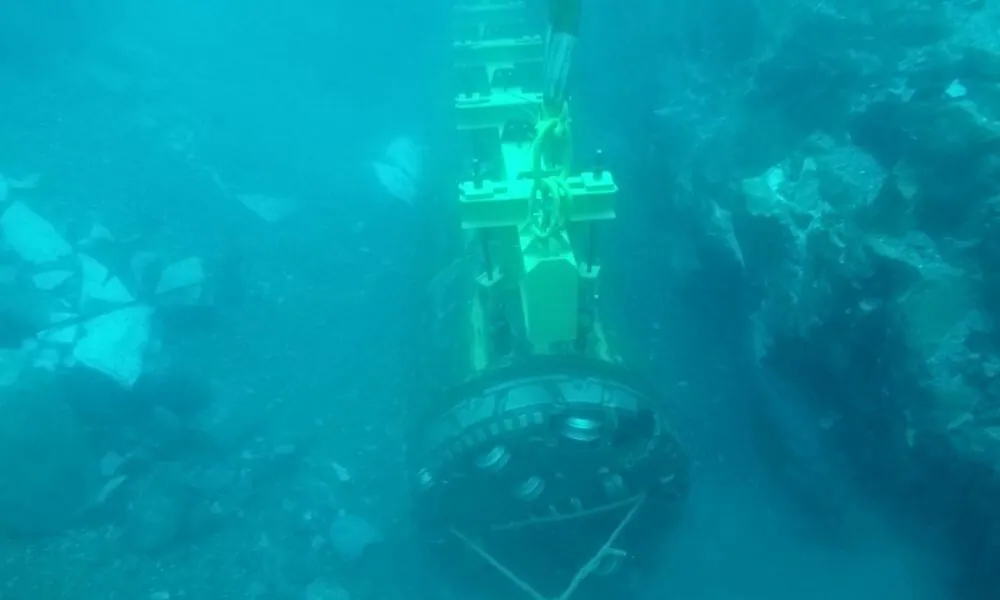
• Construction methods used: Ground-controlled microtunneling, pipe jacking, Direct Pipe® for steel pipelines, and directional drilling in specific sections. In the marine zone, operations are coordinated with professional divers or ROVs.
• Ground conditions beneath the water surface: Alluvial soils, saturated sands, silts, or mixtures typical of coastal platforms. Water pressure, permeability, front stability, and soil behavior during pressurized excavation are taken into account.
• Depth and distance from the coast: These are determined by the intake or discharge location, the required water quality, protection against sediment, and the need to ensure long-term stability and operation.
• Pipe diameters and types: From non-accessible pipes (concrete, steel, HDPE) to accessible tunnels for high flow rates. The choice depends on the project (intake, outfall, return, marine bypass) and the operator.
• Civil engineering requirements on land: Pitheads and receiving pits, platforms near the coastline, access points for heavy machinery, a sludge treatment plant, pumping equipment, a welding area, and facilities for handling long or large-diameter pipes.
• Integration with marine structures: Connection of the tunnel or pipeline to underwater structures, anchoring, ballasting, final driving, and verification through underwater inspection. Work windows are scheduled for periods of favorable sea conditions.
• Pressure Control and Stability: Pressurized methods (EPB or slurry) ensure the stability of the cutting face in saturated soils. With Direct Pipe®, continuous thrust and the integrity of the steel are monitored under marine conditions.
• Quality Control and Final Inspection: Monitoring of excavation parameters, alignment, excavated volume, chamber pressure, thrusts, and stresses. Leak testing, CCTV inspection, and verification via diving or ROV at the marine connection.
Publicado en Google Carlos Vasconcello26 Enero 2026 Publicado en Google Tidiane Ba17 Septiembre 2025 BienPublicado en Google Marcelo Virgili27 Septiembre 2024 Publicado en Google SERGIO ROJAS ROJAS16 Julio 2024 Publicado en Google Dany Fernandez Vazquez14 Julio 2022 Publicado en Google Victor Cabeza19 Marzo 2021 Publicado en Google Eduardo18 Diciembre 2018 Publicado en Google JuanK mesa17 Noviembre 2017
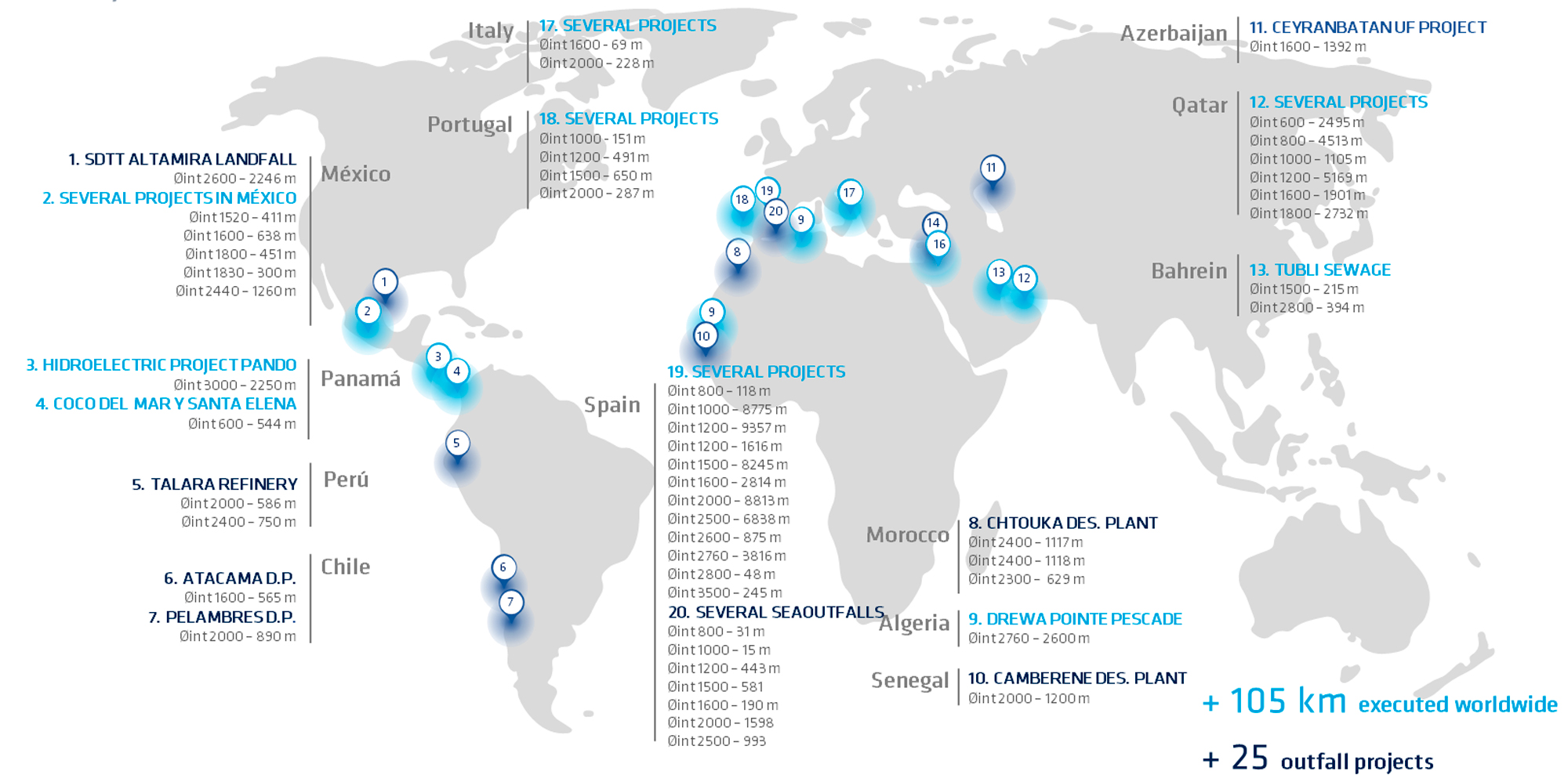
From the Americas to Asia, we have carried out highly complex projects involving submerged applications in coastal and marine environments. Thanks to our global experience, we offer safe, efficient, and sustainable solutions tailored to each local condition.
Find out more in our projects and works executed.
Underwater applications encompass activities in underwater environments related to infrastructure such as submarine emissaries, seawater catchments, dam spillways and works in marine protected areas. Depending on the project, they can be integrated with trenchless solutions such as microtunnel o Direct Pipe.
They are used when the project is carried out in an underwater environment and is constrained by the location, route, and environmental restrictions. To see other application contexts, you can compare them with terrestrial and subway applications.
Approximate location and purpose (outfall, intake, drainage, etc.).
Sketch or plan with preliminary layout and start/end points.
Known environmental constraints and project limitations.
Identification of main conditioning factors.
Recommended next steps to move forward.
If you want to move forward with a query, you can do so from Contact.
If you'd like to learn more about case studies and industry news, visit our section on news, where you'll find articles such as:

Tunnels play an essential role in water supply and desalination systems, enabling the efficient and efficient transport of water from one place to another.

Submarine outfalls are essential infrastructures in effluent management, allowing the discharge of treated water into the open sea.

Submarine outfalls are an essential part of the sewerage and water management infrastructure in many urban areas.
If you still have questions about infrastructure construction in marine environments, check out our section on frequent questions, where we answer questions such as:
Submerged applications refer to devices and technologies designed to operate underwater or in submerged environments. These applications include pumps, sensors, and water treatment equipment that are designed to operate efficiently in aquatic or wet conditions. They are built to withstand the corrosion and extreme pressures of the aquatic environment.
Submerged applications offer several advantages, including:
Submerged applications are integrated into water intake tunnels through the use of equipment designed to operate underwater, such as submersible pumps and sensors. These devices are installed at strategic points in the tunnel to ensure a constant and efficient flow of water, facilitating its transport to treatment plants or storm evacuation systems.
Maintenance of submerged applications is generally less frequent due to their robust design. However, it is important to perform periodic inspections to ensure that there is no buildup of sediment, corrosion or damage. Maintenance tasks may include cleaning components and verifying that they are functioning optimally.
Environmental conditions, such as water temperature, pressure and the presence of chemicals, can affect the performance of submerged applications. Equipment is designed to withstand a wide range of conditions, but it is crucial to select specific applications that match the characteristics of the environment in which they will operate. Eurohinca provides solutions adapted to different environmental conditions to ensure maximum performance.
Eurohinca uses advanced technologies such as high-precision sensors, submersible pumps with variable speed control, and corrosion-resistant materials to ensure optimal performance of its submerged applications. These technologies are designed to improve efficiency, durability and reliability in submerged environments, ensuring effective water handling and reliable operation in complex systems.
Solve your doubts in our section of frequent questions.