
Hydroshield Tunnel Boring Machine
Eurohinca (Europea de Hincas Teledirigidas, S.A.), Trenchless specialist since 1996 - 14 TBMs and >120 km executed.
The closed shield / hydro-shield It is ideal for use in water-saturated soils (sand/silt): control of front-end pressure, watertightness, and precise alignment at intersections and service tunnels.
See pipe jacking (microtunneling), segment tunnel,choice of tunnel boring machine, technical assistance and engineering y references.
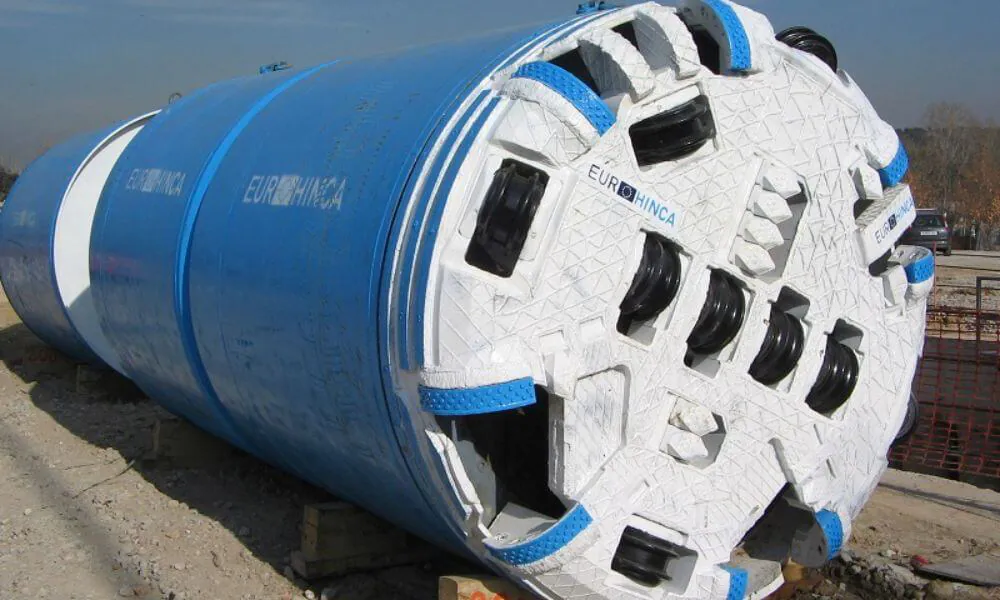
Efficiency of hydroshield TBMs
The hydroshield tunnel boring machines These are advanced machines designed for excavation in areas with a high water table, granular soils, or unstable soils. Their system of circulation of bentonite slurry It maintains pressure at the excavation face, preventing water infiltration and ensuring the tunnel's stability.
This technology is particularly useful in projects involving submarine emissaries, crossings of marine protected areas y sea water catchments, where terrain conditions require maximum safety.
Advantages of using a closed shield tunnel for excavations
The hydro shield It offers numerous advantages over other excavation technologies. Its ability to control pressure in sandy, gravelly, or saturated soils makes it the ideal choice for construction projects at risk of leaks. In addition, it allows for precise excavation while minimizing surface impact.
This method is used in projects involving complex civil engineering projects, urban supply systems y dam spillways.
In comparison, the EPB tunnel boring machine It is better suited for clay soils with low permeability, while the hydroshield is ideal for environments where water is present.
This technology is regulated under the CEN Standard EN 12110:2014 on slurry pressure tunnel boring machines, a European leader in the safety and operation of water cannons.
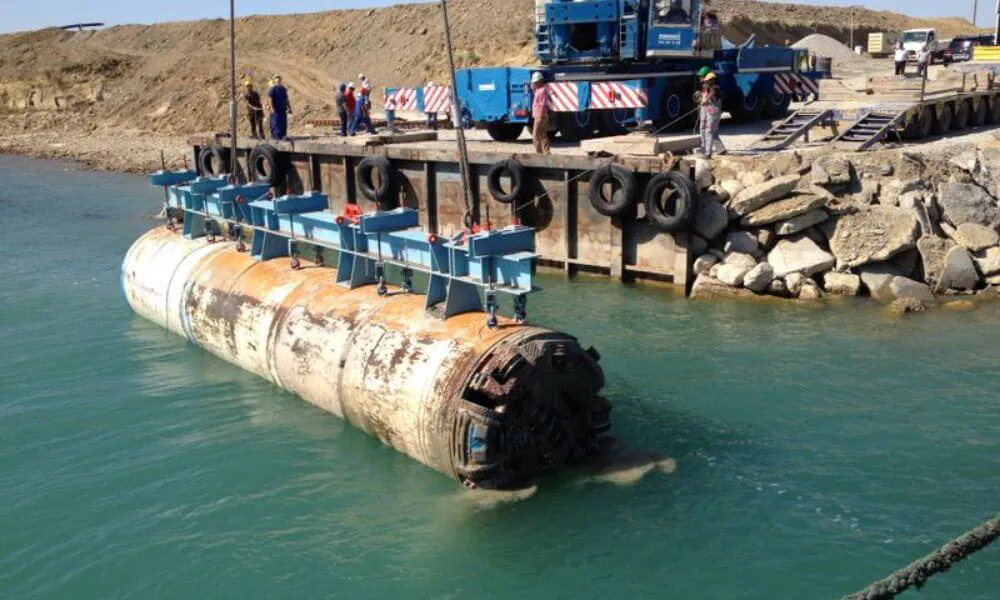
Service Specifications for Closed-Shield Hydro-Shield (Slurry)
The Slurry Shield is a tunnel boring machine designed to operate in granular, permeable, or highly saturated soils, maintaining a stable cutting face through a pressurized slurry system. Its application is defined by the following technical parameters:
• Main applications: Microtunnels and mechanized tunnels under rivers, watercourses, port areas, alluvial lands, or urban environments with high water tables, where strict pressure control is required to prevent soil loss and surface movements.
• Compatible land conditions: Sand, gravel, silt, non-cohesive soils, permeable soils, and formations with a high water content. The Slurry system allows the face to be stabilized even under conditions of high permeability.
• Front Pressure and Support System: The excavation chamber is filled with bentonite slurry or polymers that are kept under pressure. This ensures stability against the surrounding soil and minimizes the risk of seepage, siphoning, or decompression.
• Construction method: Excavation using a rotary head, mixing the excavated material with slurry, hydraulic transport of the debris through pipes to the separation plant, and installation of the lining (segments or driven pipe) depending on the project.
• Sludge separation plant: An essential component of the slurry system. It allows for the recovery of slurry, the separation of sand and gravel, the adjustment of rheological properties, and the recirculation of the fluid back to the pressurized chamber.
• Range of diameters and lengths: Suitable for microtunnels and tunnels of various diameters. Advancement lengths depend on pumping capacity, allowable pressure, ground conditions, and site logistics.
• Civil works prerequisites: Launch pits or portals with space for the hydroshield, the slurry plant, pumping equipment, return pipes, ventilation, and maneuvering areas for segments or pipes.
• Parameter Control and Guidance: Monitoring of chamber pressure, slurry density and viscosity, inlet and outlet flow rates, thrust, torque, and alignment. Guidance is provided by laser or gyroscope, depending on the route tolerances.
• Quality control and safety: Continuous inspection of the working face stability, shield tightness, slurry separation efficiency, atmosphere monitoring, internal pressure, safe access to the borehole, and geometric verification of the installed lining.
What they think of us
 Publicado en Google
 Carlos Vasconcello26 Enero 2026
 Publicado en Google
 Tidiane Ba17 Septiembre 2025BienPublicado en Google
 Marcelo Virgili27 Septiembre 2024Publicado en Google
 SERGIO ROJAS ROJAS16 Julio 2024Publicado en Google
 Dany Fernandez Vazquez14 Julio 2022Publicado en Google
 Victor Cabeza19 Marzo 2021Publicado en Google
 Eduardo18 Diciembre 2018Publicado en Google
 JuanK mesa17 Noviembre 2017

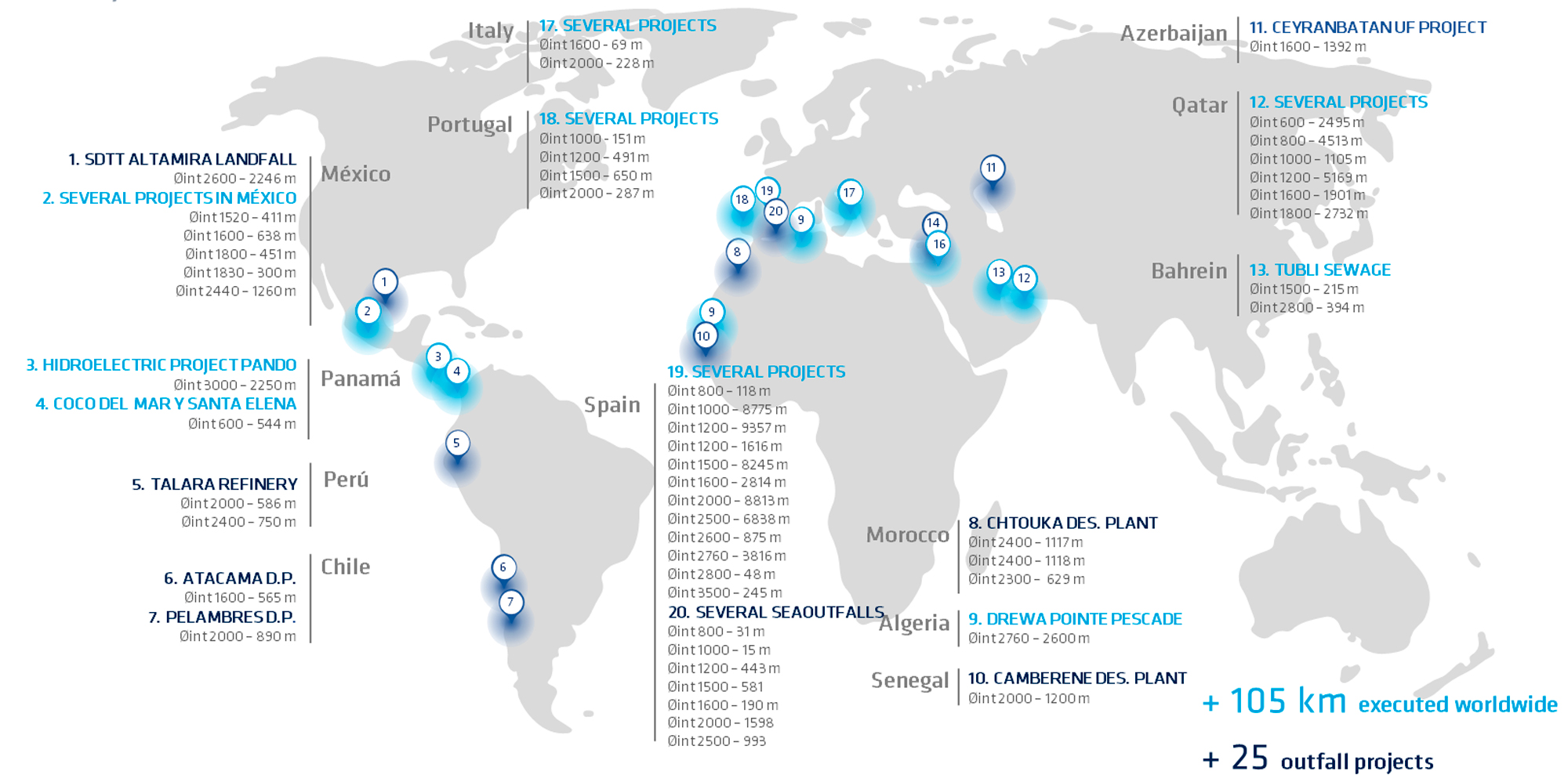
Projects around the world
At Eurohinca, we have constructed more than 100 km of tunnels using the hydro-shield method on various continents. This technique has been crucial in projects where safety and environmental protection are top priorities, such as river and watercourse crossings o urban drainage projects.
See more examples in our works executed.
HydroShield: Rapid Response
What is the HydroShield system?
A hydroshield diagram refers, in general terms, to the approach to constructing a tunnel or microtunnel using closed shield type hydro-shield, where the front end is controlled by a slurry circuit. For the general selection framework, this may be helpful choice of tunnel boring machine.
When to use
It is used when the project requires a closed shield and the approach must be adapted to the terrain, water conditions, and environmental constraints. To compare with other closed-shield rigs, you can see EPB closed shield or an overview of closed shield tunnel boring machines.
Key data
Preliminary alignment and objectives for the section (type of infrastructure and environmental constraints).
Soil information available (geotechnical or references) and presence of water if known.
Implementation and construction constraints (access points, land use, unique features).
Recommended information
Longitudinal profile and sensitive sections of the route (if any).
Requirements for the owner/operator (if applicable) and acceptance/operational criteria.
To view the associated equipment, you may find the page at closed shield hydroshield and, if the project involves intersections, infrastructure crossings.
Request for information
Does your project need to pass through areas with a high water table or a risk of leaks?
Contact us, and we'll advise you on the best hydro-shield solution.
News that may interest you
Learn more about the use of hydro-shields in real-world projects, innovations in slurry pressure equipment, and success stories on our NEWS SECTION.
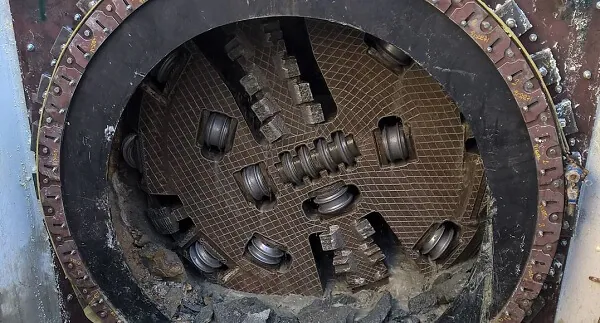
Management of pressures under high groundwater with hydroshields
Working at more than 5 bar of groundwater pressure requires the use of a closed shield of the hydroshield type.
Competitive advantages of microtunneling in infrastructure projects
In an environment where the construction of infrastructure increasingly demands more efficient and sustainable solutions, microtunneling
From pipe jacking to tunnel boring machine: Key tools in project execution
In subway construction, the evolution of techniques and machinery is essential to carry out projects with quality, safety
Frequently asked questions about hydroshield TBMs
We address the most common questions about hydroshield tunnel boring machines: how they work, their advantages, and how they differ from other types of closed shields. For more information, visit our frequently asked questions section.
What is a hydroshield TBM and how does it work?
A hydroshield tunnel boring machine is a machine designed to excavate tunnels using a tunnel excavation system. wet debris handling. It works by balancing the pressure at the tunnel face with the use of bentonite slurry or water. These slurries help maintain tunnel stability by transporting crushed muck from the excavation chamber to the surface separation equipment, minimizing the risk of subsidence.
What are the benefits of using a hydroscute tunnel boring machine?
The hydroshield tunnel boring machines offer multiple benefits, such as the ability to excavate in soft or mixed soils with high water content. The system of wet conduction helps maintain excavation face pressure, which prevents collapse and subsidence. In addition, this method reduces environmental impact by efficiently handling spoil and maintaining tunnel stability.
How is muck handled in a hydroshield TBM?
In a hydroshield tunnel boring machineIn the crushing chamber, the spoil is handled by a pumping system using bentonite slurry. The crushed spoil is mixed with the sludge in the crushing chamber and transported by pipeline to the surface separation equipment. This process ensures continuous and efficient transport of the excavated material, facilitating the operation and management of the spoil.
What types of terrain are ideal for the Hydroscudo TBM?
The hydroshield tunnel boring machines are especially suitable for difficult terrains such as soft, mixed soils or areas with high water presence. The technology of wet debris handling allows excavation in conditions where other methods may not be effective, providing an efficient and safe solution for complex excavations.
How is tunnel stability ensured during excavation with a hydroshield?
The tunnel stability during excavation with a hydro-shield is maintained by the pressure of bentonite slurries at the tunnel face. These slurries balance ground forces and help support the tunnel structure, preventing subsidence and displacement. The closed shield technology also contributes to a controlled and safe excavation.
What maintenance does a hydroshield TBM require to operate properly?
A hydroshield tunnel boring machine requires regular maintenance to ensure efficiency and longevity. This includes inspecting and maintaining the pumping systems, checking the mechanical components of the shield and monitoring the bentonite sludge. It is also important to clean and maintain the debris conveyance system to avoid blockages and ensure continuous operation.
Solve your doubts in our section of frequent questions.
 Español
  English
  Français