Tunnel Boring Machines for tunnel excavation
Eurohinca (Europea de Hincas Teledirigidas, S.A.), especialista SIN zanja desde 1996 — 14 tuneladoras y >120 km ejecutados.
Asesoramos la elección de tuneladora (escudo abierto, EPB, hidroescudo) según geología, presión y trazado, y ejecutamos con
microtúnel (MTBM),
segment tunnel,
Direct Pipe y
HDD — trazado preciso, control de presión/estanquéidad y cumplimiento ISO 9001/14001/45001.
See technical assistance and engineering y
referencias.

Tunneling with tunnel boring machine
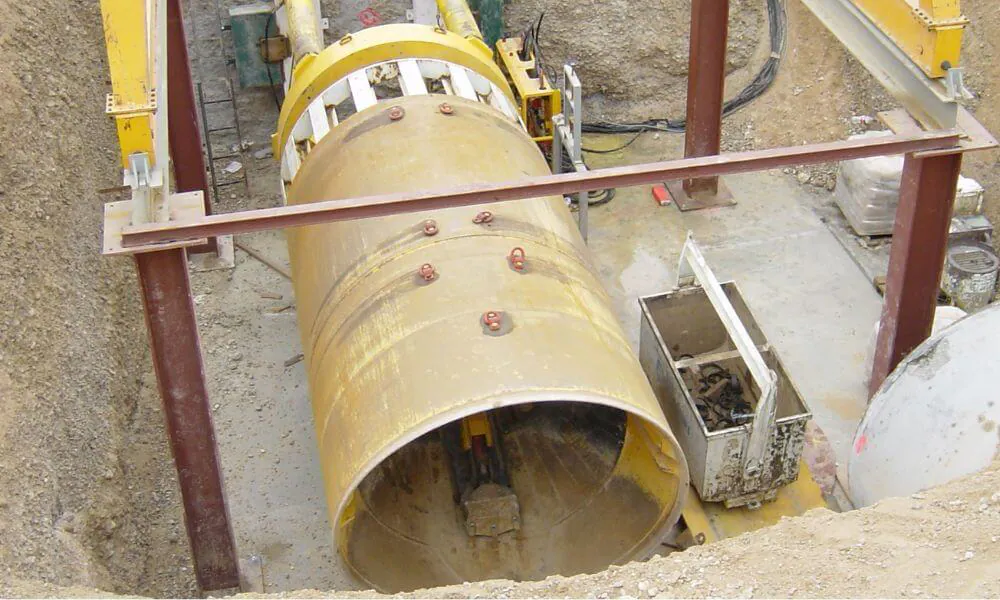
The tunnelling with tunnel boring machine is an advanced technique that guarantees efficiency and safety in subway projects. Using specialized equipment, such as our tunnel boring machines, we are able to carry out the tunnel excavation accurately, minimizing the impact on the environment and ensuring that project deadlines are met. TBMs are designed to adapt to different types of terrain, making them a versatile solution for a wide range of applications, from subways to sewer tunnels.
How excavation with a tunnel boring machine is performed
In a subway project, the tunnel boring machine in subway projects plays a crucial role in facilitating the continuous and structured excavation of the tunnel. The TBM advances as it excavates, while the excavated material is efficiently transported to the surface. This process ensures that the tunnel is constructed according to project specifications, maintaining the integrity of the subway environment and allowing effective integration with other infrastructure.

Choice of Tunnel Boring Machine
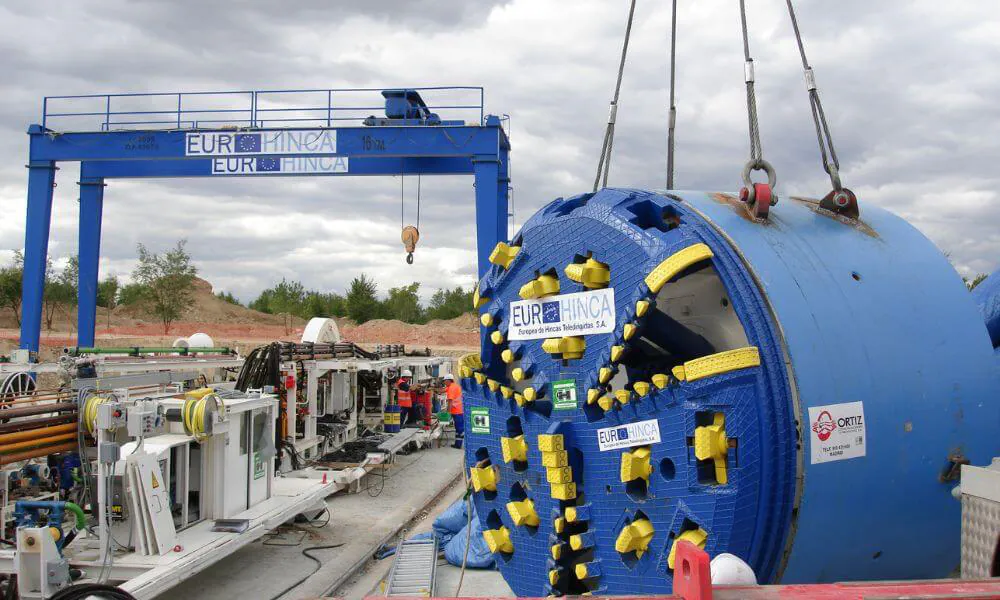
Having a good geological study is essential for the proper execution of a project. Based on the geology, the most appropriate drilling system will be chosen (with EPB TBM, Hydroshield, hard rock shield or open shield).
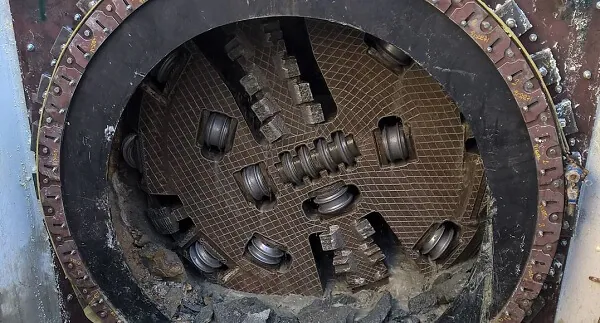
Likewise, the geology defines the type of cutting wheel to be installed in the TBM, the percentage of opening, the type of cutting tools, cutting discs, scrappers, as well as the durability of the tool to define the places to change them.
Thanks to the different drilling equipment we have at our disposal as well as the experience we have accumulated, we can offer you a wide variety of options.
Types of tunnel boring machines
Especificaciones del servicio de selección de tuneladora (TBM/MTBM)
La elección de la tuneladora adecuada es un proceso técnico que depende de la geotecnia, las exigencias del trazado y los objetivos hidráulicos o estructurales del proyecto. La selección del equipo se basa en los siguientes parámetros y criterios principales:
• Tipo de proyecto y sección requerida: Determinación del diámetro y del tipo de túnel a ejecutar (microtúnel no visitable, túnel visitable, conducción hidráulica, galería de servicios o colector con dovelas).
• Condiciones del terreno: Evaluación de suelos cohesivos, mixtos, arenas, gravas, transición a roca o presencia de nivel freático. Esta información define si se requiere un cabezal EPB, hidroescudo (Slurry), open shield o una TBM para roca.
• Presión de frente y estabilidad del terreno: Análisis de la necesidad de control de presión para evitar asentamientos o pérdidas de suelo, especialmente en terrenos saturados, urbanos o sensibles.
• Requisitos de alineación y curvatura: Trazado recto o en curva, radios mínimos admisibles, tolerancias geométricas, pendientes y profundidad de la conducción. Esto condiciona el sistema de guiado (láser, giroscópico) y el tipo de junta o anillo utilizado.
• Longitud del tramo y logística de empuje: Estimación del empuje necesario, posibilidad de estaciones intermedias (en MTBM) y capacidad del sistema hidráulico o de avance continuo según el método constructivo previsto.
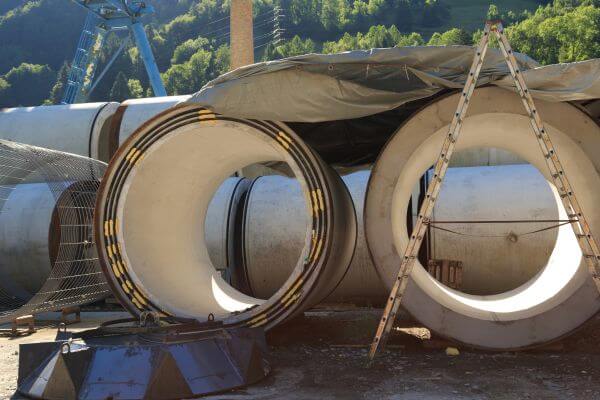
• Características de la tubería o dovelas: Tipo de revestimiento final (acero, hormigón, dovelas prefabricadas), resistencia a compresión y comportamiento estructural frente a las cargas del terreno y al empuje de la tuneladora.
• Requisitos previos de obra civil: Dimensionamiento de pozos de ataque y recepción, portales o galerías de lanzamiento, capacidad de grúas, accesos para tubería y equipos auxiliares, energía y ventilación.
• Sistemas auxiliares necesarios: Planta de lodos, bombas, transportadores, lubricación, sistemas de extracción de material, soldadura (si es tubería metálica) y equipamiento HSE para trabajos en espacios confinados.
• Control de calidad y seguridad: Monitorización continua de parámetros de excavación (par, empuje, velocidad, presión), seguimiento de la trayectoria, inspección del revestimiento, verificación as-built y cumplimiento de protocolos HSE en túneles y pozos.
What they think of us
Publicado en Tidiane Ba17 Septiembre 2025 BienPublicado en Marcelo Virgili27 Septiembre 2024 Publicado en SERGIO ROJAS ROJAS16 Julio 2024 Publicado en Dany Fernandez Vazquez14 Julio 2022 Publicado en Victor Cabeza19 Marzo 2021 Publicado en Eduardo18 Diciembre 2018 Publicado en JuanK mesa17 Noviembre 2017
Projects around the world
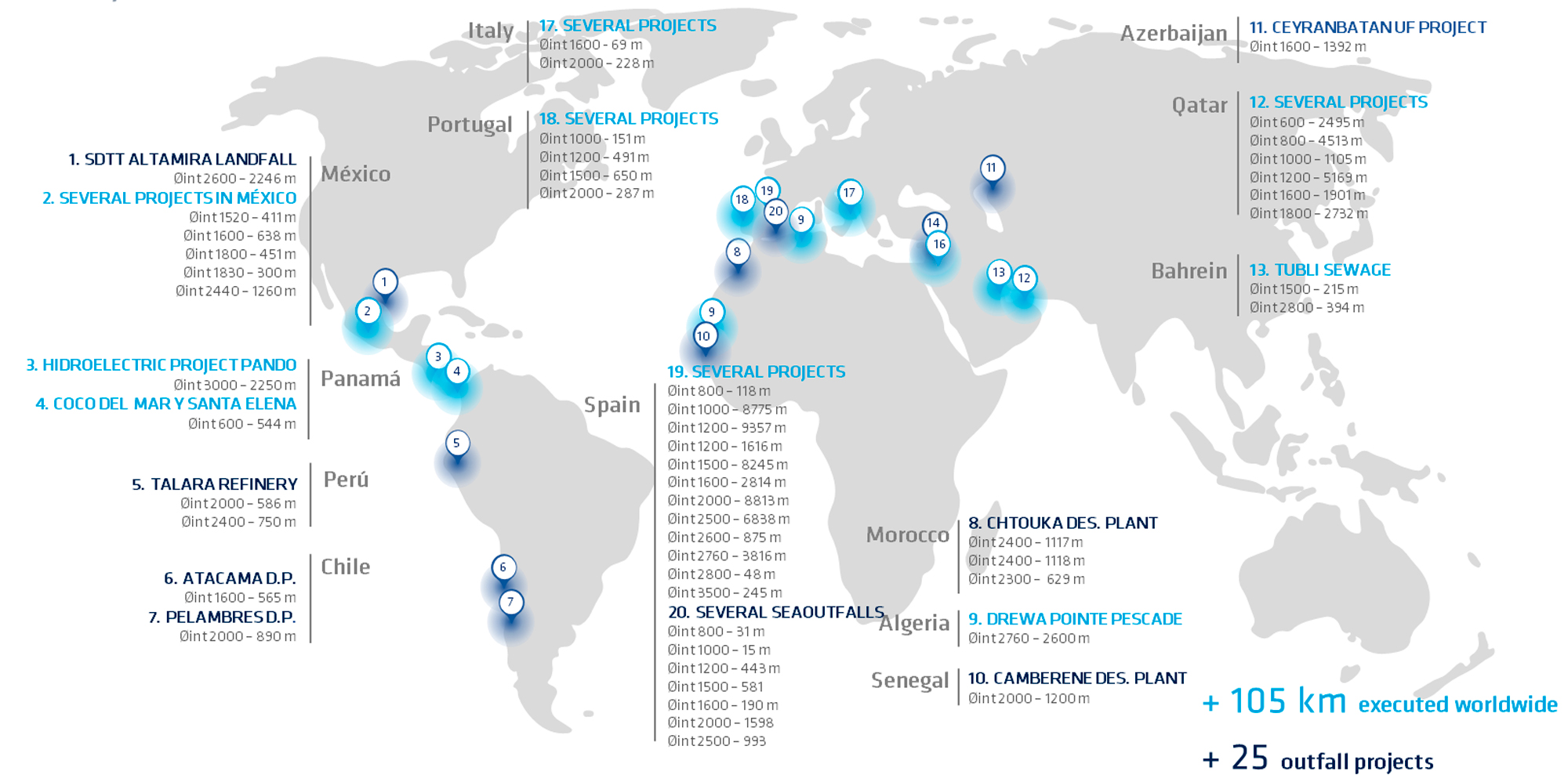
Desde América hasta Asia, Eurohinca desarrolla proyectos de microtunelación, hinca de tubería y emisarios submarinos en entornos costeros, urbanos e industriales. Nuestra experiencia global nos permite ofrecer soluciones seguras, precisas y sostenibles, adaptadas a las condiciones más exigentes.
Descubre más en nuestra sección de proyectos y obras ejecutadas.
Request for information
Thank you for considering our company for your business proposals!
News that may interest you

Management of pressures under high groundwater with hydroshields
Working at more than 5 bar of groundwater pressure requires the use of a closed shield of the hydroshield type.

Open shields in rocky soils: strategies to minimize fracturing
Working with open shields in rock massifs combines the most demanding cutting mechanics with the advantage of being able to evacuate

Competitive advantages of microtunneling in infrastructure projects
In an environment where the construction of infrastructure increasingly demands more efficient and sustainable solutions, microtunneling
Frequently asked questions about tunnel boring machines for tunnel excavation
What kind of tunnels can be built with a tunnel boring machine?
The tunnel boring machines are versatile and can be used to construct a variety of tunnels, including subway tunnels, road tunnels, tunnels for utilities such as water and sewer, and mining tunnels. The specific type of tunnel boring machine is selected based on the type of terrain and project requirements.
How does the type of terrain affect the choice of TBM?
The type of terrain influences the choice of TBM, as different TBMs are designed for specific conditions. For example, closed shield TBMs are suitable for unstable ground, while EPB TBMs are ideal for soft ground. The right choice ensures efficient and safe excavation.
How is the feed rate of a tunnel boring machine controlled during excavation?
The excavated material by a tunnel boring machine is handled by a specialized system that includes conveyor belts or wagons. Once the TBM breaks through the ground, the spoil is collected and transported through these systems to the surface. There, the material can be processed or managed according to the needs of the project, ensuring a continuous and efficient flow during excavation.
What measures are taken to ensure accuracy in tunnel construction?
To ensure the tunnel construction accuracyadvanced control and monitoring systems, such as lasers and leveling sensors, are used. These systems allow the alignment and profile of the tunnel to be adjusted and monitored during excavation, ensuring that it meets project specifications.
What is the typical duration of a TBM excavation project?
The duration of an excavation project The length of tunneling with a tunnel boring machine varies depending on the size of the tunnel, the type of terrain and the speed at which the tunnel boring machine advances. Small projects can take a few months, while larger, more complex projects can extend over years. The specific time is determined by the project conditions.
How is the maintenance of a tunnel boring machine performed during a project?
The maintenance of a tunnel boring machine during a project includes regular checks of the mechanical and cutting systems, as well as inspection of the muck conveyor systems. Technicians perform preventive and corrective maintenance to ensure that the TBM is working properly and to minimize the risk of failure during excavation.
Solve your doubts in our section of frequent questions.